
Reading with Vision Loss
My sight is slowly getting worse, and I have to be very aware of that. I'm an avid reader. I thought, oh, I'm not gonna be able to read anymore.
From labels to letters, from recipes to books, there's a lot of reading that happens in our everyday lives, and with vision loss, whether you have low vision or no vision, it can be tricky to find exactly what you need to make reading a little easier. At Hadley, we have lots of ideas that can help.
Today we're going to talk about some tips and tools that come in handy, whether you're reading a few words, diving into a novel or anything in between. Let's start with lighting. If you have low vision, the right lighting can make a huge difference. Whether you'd like to read bills and mail at your desk, or you want to set up a cozy little reading area, it's a great idea to add some task lighting to your space.
Good task lighting is typically brighter than the general lighting in your room, and you can place it right where you want to provide light, where you need it most. You can find desk and floor lamps that have adjustable arms, and that makes it a lot easier to shine the light right where you're reading.
Positioning the shade below eye level will help direct the light so it shines away from your eyes.
Now, if you have issues with glare, getting just the right amount of light can be a challenge, especially if you're reading on bright white paper. Too much glare can make your eyes feel really tired. Check out Hadley's. Let's Talk Lighting workshop, as well as our workshop on glare for some really great tips that will help you make your reading experience so much easier on the eyes. Having the right lighting in the right place can really change everything.
Magnifiers can also be a big help for reading, whether it's just a few words or something a little longer, and there are several different types to choose from.
You can find magnifiers with a stand to help keep things steady. Magnifiers with built-in lights to brighten up a dimly lit area, and even digital magnifiers that give you the ability to change the color and contrast and make the words really stand out.
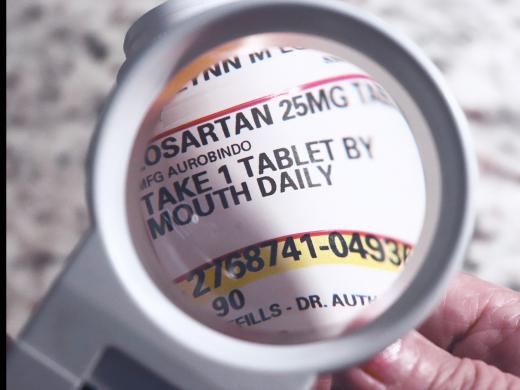
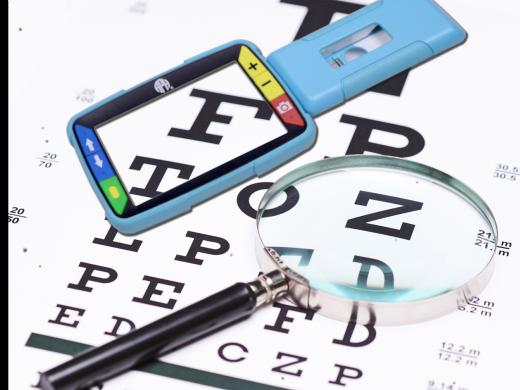
One common type of magnifier that you might already have is a handheld magnifier. These can be great for reading small amounts of text like price tags, labels, and even a thermostat. These magnifiers are often small enough to fit right into your pocket or purse, so it's easy to always have one at hand. There are so many magnifiers to choose from, and talking with a low vision specialist can help you find just the right one.
So far, we've been talking about reading with your eyes, but there are other ways to read too, including listening to the text.
One device that can read your text out loud is your smartphone. There's an app called Seeing Ai that's available for both iPhone and Android smartphones. Seeing AI can use your phone's camera to read all the text around you, identify money and so much more. It can read something as small as a price tag or as large as a sign method,
VoiceOver: Ant-bac bathroom cleaner, $4.99
And best of all, it's free. Check out our Seeing AI series to learn even more about reading on your smartphone.
If you love reading books, there's another great way to enjoy them, and that's by listening. In fact, there's a whole library of audio books that are absolutely free of charge. These are available through the National Library Service, or NLS.
NLS will even send you a handy audio book player called the Digital Talking Book Player. If you're interested, you can call a librarian at your state branch of NLS and ask for the audio books you want, and they'll be mailed right to your home. You can also download audio books from NLS to your computer or smartphone.
Hadley has workshops on how to download NLS books as well as how to use the digital talking book player. Just give us a call and a Hadley specialist will be happy to help you get started.
Now, one more approach to reading is braille and learning braille isn't just for reading books. Learning to recognize letters and numbers can be really helpful, so you can read things like elevator buttons and signs in a building. You can also create your own braille labels to use around the house. Hadley's Braille for Everyday Use is a series of step-by-step interactive workshops that help you learn to use your fingers to read, and you can get started learning braille by signing up for the workshops anytime or call Hadley to learn more.
There are so many great tools that can help you continue to read even if your vision is impaired. You can find all the series and workshops mentioned right here on the Hadley website, and you can always call a Hadley specialist to discuss your individual needs.
When I realized my vision began to fail and I thought, oh my gosh, what am I gonna do? I won't be able to read. That would've been a huge loss, but now I do audio books, the NLS Talking Books program through my state library. I've got tons of books to read. I've always got something to read.
Reading with Vision Loss
- Video · 5 minutes
- Video · 4 minutes
- Video · 4 minutes

- Video · 7 minutes
Explore
-
"It's not my whole life"
Audio · 3 minutes
-
I can’t drive anymore
Resource guide
-
Using Your Phone without Reading the Screen
Article · 5 minutes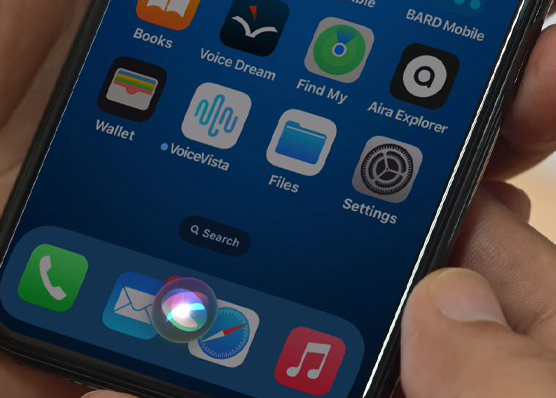
-
Recreation Chat
Discussion
- Explore more
Members also liked
- Video · 3 minutes

- Video · 5 minutes
- Video · 6 minutes
- Video · 4 minutes

Join the Hadley Community
Hadley's resources are always available to you. Create a no-cost Hadley account to go further:
-
Pick up where you left off Everything you start is automatically saved across Hadley.
-
Personalized recommendations We'll suggest resources based on your interests.
-
Join live discussions Live and lively discussions on technology, cooking, and more, all geared toward the community of people living with vision loss.
-
Find peer support Connect with people who understand what you're going through.