
On January 4, we celebrated Louis Braille’s birthday—and the tactile reading system he created as a teenager. Across the Hadley community, members often share a simple realization: learning just a little braille can begin to change everyday moments.
Braille for small, meaningful choices
For some, braille is a return to small, meaningful choices: telling medications apart, labelling a spice jar, keeping track of laundry products, identifying a freezer meal, and more. Each step adds up.
This feeling of possibility doesn’t always come easily. Many people begin with doubts, wondering if they’re starting too late, if their fingers will be sensitive enough, or if braille is meant for “other people.” Hadley member Audrey Griffith felt those questions, too.
“I haven’t lost my ability to learn”
In the Hadley Presents episode Braille for Everyday Tasks, Audrey shared how her perspective began to shift.
“I realized . . . how I could make my life easier by learning braille and labeling things in my home that I really didn't know what they were. I'm 75 years old . . . it may not be as easy . . . but I haven't lost my ability to learn because of my age or because of my blindness. I still have capabilities. And realizing that braille could make my life easier . . . has kept me going.”
When braille fits into everyday life
What surprised Audrey—and many others—is that using braille doesn’t require mastering everything at once. A few letters can be enough to make daily life smoother, reducing small frustrations that can add up over time. For Audrey, braille began to fit naturally into her days:
“It's actually fitting in. Well, yes, I've had a chance to read the signs outside my home and in my home. I do practice my braille every day, but I do it at different times during the day because I have a very busy life. And so I fit braille in where it fits—but I make sure to do it because it has become a love.”
Braille’s usefulness didn’t stop at Audrey’s front door. It also connected to something she cared deeply about: traveling independently.
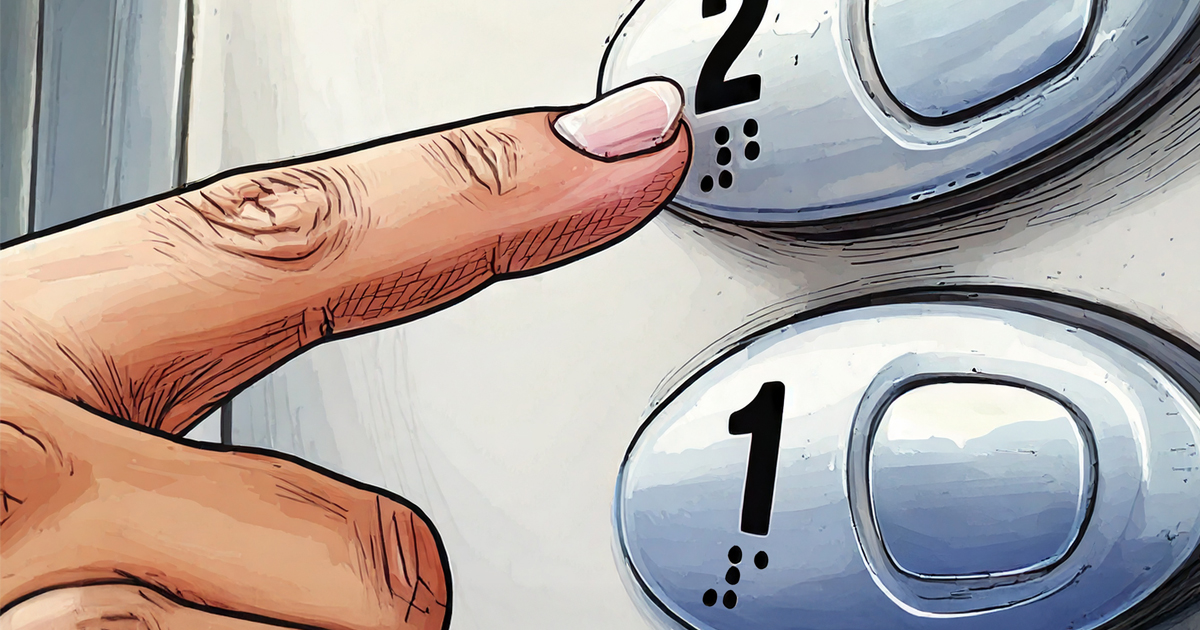
“I loved to travel, and I realized that if I'm traveling by myself . . . I would need to be able to read the elevator and read the room numbers. And so, it became very important to me to learn braille.”
For many people, even a small amount of braille can make public spaces feel more approachable, whether that’s using the elevator buttons, finding the right restroom, recognizing an office door, or confirming a hotel room number. These moments help restore confidence in moving through the world away from home.
Support makes the difference
Still, progress like this doesn’t happen easily in isolation. Audrey spoke openly about how important encouragement was when learning felt difficult:
“I've struggled a lot . . . and if it wasn't for . . . encouragement, I probably would've quit.”
That need for support is something Hadley members talk about often: someone who can normalize the struggle, offer a strategy, and keep you going.
If you want to explore braille as a way to make everyday tasks easier, Hadley offers the free Braille for Everyday Use workshop series. You can listen to the workshop audio by phone or online, and the books include real braille labels that can be used right away. When questions come up, a braille specialist is just a phone call or email away during business hours.
Hear from others
Many Hadley members have shared their braille experience with Hadley. Here are links to their stories:
- Hadley Presents, Braille for Everyday Tasks, with Hadley members Audrey and Jeff
- Hadley Presents, Learning Braille for Everyday Use, with Hadley member Wendy Spencer Davis
- Hadley Presents, Braille for Everyday Use, with Hadley member Mark Andrews
To learn braille this way, just call Hadley: 800-323-4238.
Do you use braille in your daily life, or are you curious about how it might fit into yours? We invite you to share your experience or thoughts.
1 Comment
This is a great post. I learned Braille as a child from a teacher who came to the house. She was very supportive and encouraging. Family and friends were and still are also supportive and encouraging. I am now the proud owner of one of the NLS HumanWare eReaders, and have been learning UEB.