
When Vision Loss Brings Grief
Anne: My name is Anne Rinard, and in 2018 I was diagnosed with macular degeneration. In 2021, my kids were here for Mother's Day, and I noticed that I couldn't read the clock and just a few other things that were blurry. When I went back to the retina specialist, they gave me an injection, so for a year I was going almost every other week because it was changing so much. Every time you lose some vision, it's almost like starting all over. I find the emotional adjusting and readjusting to be exhausting, and that was why I signed up for the Hadley peer to peer.
When my mom was in the hospital with congestive heart failure, I called my peer. I called Linda and I'm like, “I'm pointless here because I can't drive, I can't help.” I was expecting her to say, “Oh, I know that's really hard,” but she says, “Nope, you can't drive. Let it go. What can you do?” “Okay, you're right. What can I do?” It helped me change my attitude and it opened the door for me to say, I still have choices. I still have some control, so that was a really big difference for me.
Narrator: Does this sound familiar? If, like Anne, you are facing vision loss, you know that it doesn't just change how you see the world; it changes how you live in it. It can shake your confidence. You may even feel like you're losing a piece of who you are.
To further complicate matters, for many, like in Anne's case, as time goes on, vision just keeps changing, so you need to keep adapting, too. Anne described the rollercoaster she was on, adjusting and readjusting to her vision loss, as being emotionally exhausting. Can you relate?
Let's explore the ways changes to vision can impact emotions and our overall sense of wellbeing. We'll also share some tips others have found helpful for coping with and navigating these changes.
First off, let's talk about grief. It's a heavy word and you may think of it only in the context of mourning the loss of a loved one. But sometimes it begins when your world starts to change, as Anne’s did. Grief is often associated with feeling sad, but it can also show up as anger when someone, for instance, assumes you can see what's on the TV screen. Or it could be the frustration you feel when you're handed forms to fill out at a doctor's office, or feeling numb and unmotivated to get off the couch.
If you've found yourself feeling any of this about your vision and the changes it has brought to your life, just know that these reactions are completely normal. In fact, they're so common as to be expected when we are confronted with major life changes.
Another thing about grief is that it doesn't typically follow a straight path. Some days may seem manageable. Other days, the weight of the change may feel heavy again. This emotional rollercoaster you may be feeling, while likely exhausting, is just how grief typically works. It doesn't mean you aren't adjusting the way you should be. It's just that you miss being able to see the way you used to, and it's hitting you hard at the moment.
Anne also brings up a topic that hits many extremely hard: giving up the car keys. When she says, “I'm pointless here. If I can't drive, I can't help,” she is saying what many feel when their eyesight isn't reliable enough to drive anymore. In fact, more than any other aspect of vision loss, having to stop driving tends to be felt most dramatically. It can feel like losing independence and a piece of your identity. There can be a sense of freedom that goes along with jumping in the car to run an errand or join a friend for coffee, and its loss is often felt intensely.
Of course, you know that there are other ways to get around, but having to arrange for and ask for a ride can be difficult, too. Not surprising, many facing this scenario shut down and isolate themselves, which can lead to its own set of challenges.
So how do you cope and adjust? First off, it's important to note that grieving a loss, allowing yourself to fully feel it, doesn't mean that you are going to be stuck in the doldrums. There are some things you can do to help yourself cope and adjust and navigate through.
An idea to start with is to simply acknowledge to yourself that you are feeling the loss. Recognizing that this is a completely different life than you expected, that it is a loss for you, rather than pretending that nothing has changed or that it doesn't matter to you, can serve a purpose. It affirms what you are going through. It may even free up some energy—energy you've spent trying to ignore how you actually feel.
It's okay to say to yourself, “This is hard and I really wish it wasn't happening to me.” The very act of acknowledging this reality, for many, can be a bit of an emotional release.
Another thing that can help is to talk about how you're feeling. Let it out and tell someone else how you feel about the changes that have happened with your vision. For some, a therapist or counselor plays that role. For others, a friend or family member. You'll want to find someone who will listen without judging you or assuming that it's their job to fix things for you or simply cheer you up. Tell them you just need them to listen to you and be there with you.
Anne turned to her Hadley peer to find the support she needed. Someone who listened, served as a sounding board, and then challenged her to find a new way forward. Others find joining a support group of peers with vision loss to be helpful. It can be so powerful to share something hard and have someone else reply, “I know. It's hard for me, too.”
A last tip for coping that many find helpful is simply this: Remember to be kind to yourself. Give yourself time to emotionally adjust. Many of us are a lot more patient with other people in our lives than we are with ourselves. If that sounds like you, it may be time to cut yourself some slack. Give yourself credit for how far you've already come, and celebrate any small wins along the way.
When Anne's anger and frustration lessened a bit, she realized that she still was a capable person. She could still help her mom, but it would have to be in a different way. As she phrased it, “It opened the door for me.” Her perspective began to shift.
Whatever you may face along this road, just know that Hadley is here to walk alongside you. You don't have to face vision loss alone.
The Emotional Impact of Vision Loss
- Video · 10 minutes
- Video · 9 minutes
- Video · 7 minutes
- Video · 8 minutes
Explore
-
"It's not my whole life"
Audio · 3 minutes
-
I was just diagnosed
Resource guide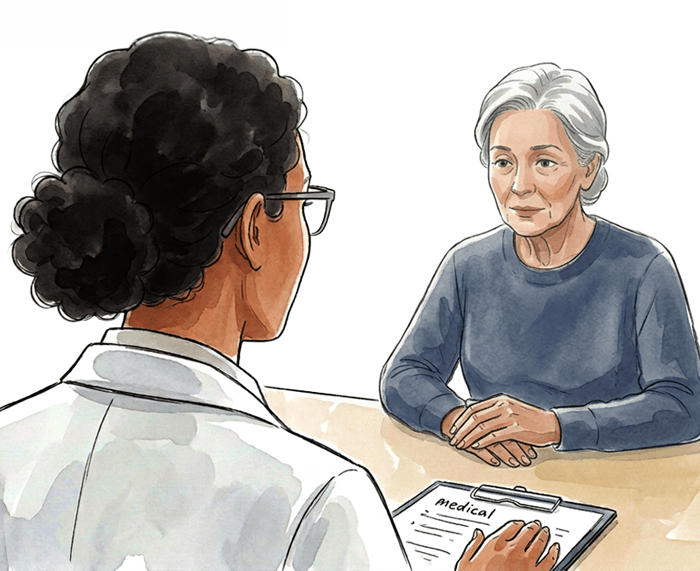
-
5 Free Apps to Help After Vision Loss
Article · 5 minutes
-
Writers' Circle
Discussion
- Explore more
Members also liked
- Video · 5 minutes
- Video · 4 minutes
- Video · 3 minutes

Join the Hadley Community
Hadley's resources are always available to you. Create a no-cost Hadley account to go further:
-
Pick up where you left off Everything you start is automatically saved across Hadley.
-
Personalized recommendations We'll suggest resources based on your interests.
-
Join live discussions Live and lively discussions on technology, cooking, and more, all geared toward the community of people living with vision loss.
-
Find peer support Connect with people who understand what you're going through.