
Card Games
Like thousands of other people, you love playing card games with family and friends. Well, you don’t have to let your level of vision get in the way of your love of the game. Stick with us and we’ll walk you through some helpful tips and ideas to play the night away.
First off, if you’ve got low vision, good lighting is always essential. So, if you need more light, add a lamp with a flexible arm so you can adjust where the light hits your cards and avoid shadows and glare.
If you play card games around the kitchen or dining room table, there’s usually an overhead light source. Good lighting makes game play easier. And playing seated around a table keeps the draw and discard piles within reach. Try covering the table with a solid colored, cloth table covering. If the cards you’re using have white backgrounds, then a darker tablecloth give you better contrast. Also, a tablecloth keeps the cards from moving around too much if you need to lay them out in front of you during game play.
Another option is to make a placemat using grip shelf liner. Playing your cards on a surface like this keeps them from moving around and gives you an outlined place to play your cards.
To enjoy favorites like Rummy, Bridge, Spades, and even Poker, use large print, high contrast, or braille playing cards. Find out where to order these cards in the Resources section of this workshop.
Now, before the game starts, ask the other players to go around the table and say their names so you know where each person is sitting.
And if you already knew how to shuffle cards before your vision changed, that means you’ve probably developed muscle memory for that task. So, you should still be able to mix the deck like you did in the past. There’s also a gadget you can buy to shuffle for you if that has become challenging or you don’t know how. Automatic card shufflers quickly mix the decks. They’re battery operated and usually hold two decks of standard sized cards. One drawback to them though is that they don’t work well with braille playing cards. The Resources section of this workshop includes information about where card shufflers can be ordered.
After the cards are shuffled, it’s time to deal them. You can keep using the method for dealing cards that’s always worked for you if you already have one. And if you have some vison, have the players use contrasting placements that you can place their cards on. The Handouts section of this workshop includes tips for dealing cards if you’re looking for a new way to try.
Have each player announce what they’ve played or discarded. Players can also help by letting you know when they’ve finished their turns. This can even be with sound or touch cues, like a knock on the table or a tap on your hand.
Organize the cards in your hands. The traditional fan of cards you used in the past may not be so easy to see anymore. You can buy card holders that make it easier to see all your cards by spreading them out. Not to mention they free up your hands during game play. There are a variety of card holder styles on the market. The Resources section of this workshop includes some of the places where card holders can be purchased.
Some card games come with a plastic tray to hold the draw and discard piles. If this type of set up makes your game play easier, try using shallow food storage containers to keep your draw and discard piles separate. Trays can also be purchased online. Check out the Resources section of this workshop to find some good options.
If you’re playing with standard cards, use a low vision device to magnify the cards in your hand. And if you’re playing with braille cards, keep in mind that laying them face up on the table to make them easier to read will allow other players to see your cards. If holding and reading them at the same time is difficult, try resting your hand on your lap under the table to check your cards.
There are several card games that don’t even need to be adapted for players with low vision. Straight out of the box, the pictures on these cards are easier to read. They might use large numbers and letters. Or, each card might have a single-color background. Many of them have also been adapted with braille by online companies who sell products for people who are blind or visually impaired. A list of some of the most popular games like this and where you can buy them is included in the Resources section with this workshop.
And if you’re playing with kids, don’t fret! There are several versions of Old Maid, Go Fish, and Crazy Eights that have been adapted for players who are visually impaired. Sometimes you can even find jumbo versions of these games at discount stores where games are sold.
As always, if you need more information or you’ve got your own tips to share, contact a Hadley Learning Expert. Of course, as with anything new, give yourself time, patience, and practice and you’ll get there.
-
Handouts
This handout describes the method of making piles of cards in front of you as an alternative to traditional dealing.
Low Vision-Friendly and Braille Cards Games (PDF)
This handout lists commercially made card games that are low vision-friendly (large numbers, single pictures, identified by color) and have been modified to include braille.
Adapting Cards for Game Play (PDF)
This handout lists ways to adapt cards for game play so they can be identified with little or no vision.
-
Products
Round Disk Playing Card Holder
Stand or Hand Held Card Holder
Low Vision and Braille Playing Cards from MaxiAids
Two-Deck Automatic Card Shuffler from Amazon
Hands Free Playing Card Holders from Amazon
Playing Card Tray Regular Size from Braille Superstore
This holds draw and discard piles.
Braillable Labels and Sheets from APH
Adhesive braille labels
Games Series
- Video · 5 minutes

- Video · 2 minutes

- Video · 4 minutes
- Video · 3 minutes

Explore
-
"I really got into the things I could still do"
Audio · 4 minutes
-
It's hard to ask for help
Resource guide
-
The Crochet Life: 7 Tips for Crocheting After Vision Loss
Article · 4 minutes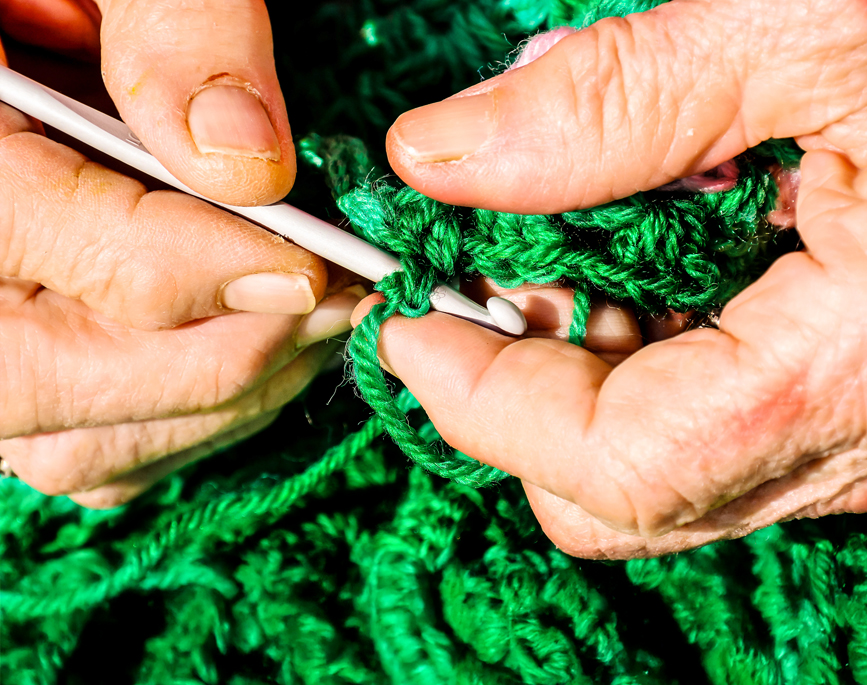
-
Resource Roundtable
Discussion
- Explore more
Members also liked
- Video · 3 minutes

- Video · 4 minutes

- Video · 3 minutes

- Video · 6 minutes

Join the Hadley Community
Hadley's resources are always available to you. Create a no-cost Hadley account to go further:
-
Pick up where you left off Everything you start is automatically saved across Hadley.
-
Personalized recommendations We'll suggest resources based on your interests.
-
Join live discussions Live and lively discussions on technology, cooking, and more, all geared toward the community of people living with vision loss.
-
Find peer support Connect with people who understand what you're going through.