
Living with Diabetic Retinopathy
Kara: Hi, my name is Kara Snyder, and I am from Pittsburgh, Pennsylvania. I have diabetic retinopathy.
When my vision changes really ramped up and I had to go through a period of uncertainty, it was like I was grappling to find my feet again.
Let's take a look at how diabetic retinopathy can affect some of the most common things we do, along with some tips that might make some of these tasks just a bit easier.
Diabetic retinopathy affects the blood vessels in the eye. You might not have any symptoms in the early stages. However, as things progress, you might develop floaters, which appear as spots or like dark strings that are kind of floating around in your vision. These floaters could get in the way and make it more difficult to see clearly. You might also experience blurry vision, dark or empty spots, and your vision might fluctuate or change throughout the day.
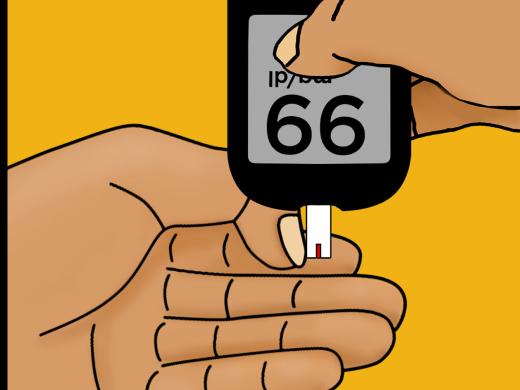
Diabetic retinopathy is caused by high blood sugar and it can result in significant vision loss over time. So if you have diabetes, that's one reason you're encouraged to monitor and test your glucose levels, but that can be really tricky if you're having trouble with your vision.
Here's a tip that can really help. Use your thumb to mark the spot where your test strip will go. You can start by placing the back of your hand on a flat surface to keep it steady. Then gently press your thumbnail onto your finger where you're gonna test. Pick up the lancet with your other hand. Then slide the lancet down your thumbnail until it's in the right position to prick your finger.
After you prick your finger, you'll keep your thumbnail in the same spot. Then just do the same thing with a test strip in your monitor, and that will help to guide it down to just the right place.
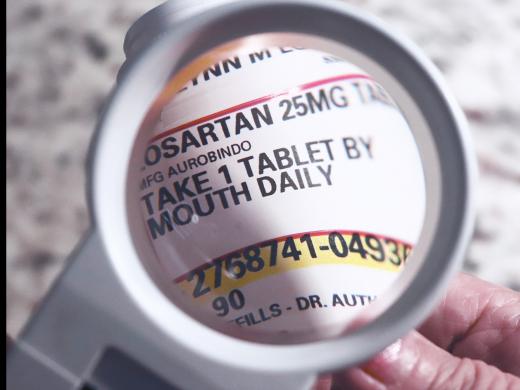
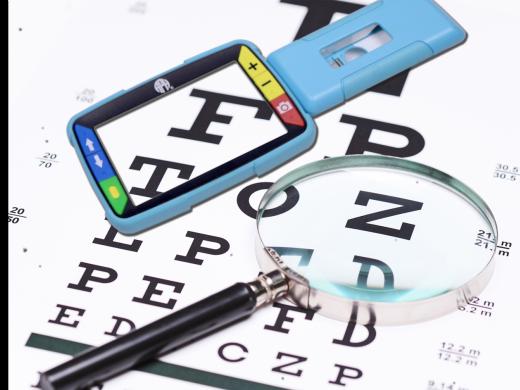
Now in the early stages of diabetic retinopathy, you might notice some small changes in your vision, like having trouble reading print. Some people say it's like looking through a sheet of crumpled wax paper. If the words you're trying to see begin to look blurry using a handheld magnifier can really help.
Here's a great tip for finding just the right distance to hold your magnifier over what you want to see. Start by placing the magnifier directly on what you want to look at. Then slowly move it towards your eyes and stop once the writing gets clear, it really helps to keep a straight line from your eye through the magnifier and right to what you're looking at. You might even find that it's helping to have different kinds of magnifiers for different situations. One size definitely doesn't fit all, and it's a smart idea to find the one that works just right for you.
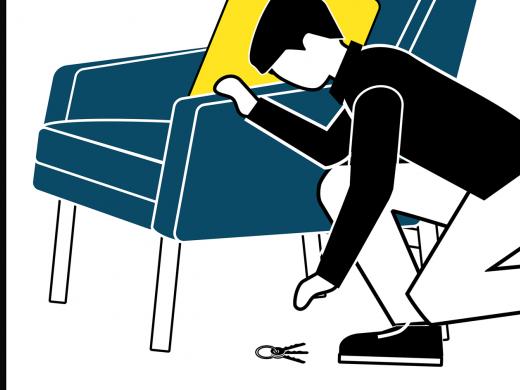
If you're not seeing clearly as you move about. Tripping or falling can be a real risk. So reducing clutter is so important. This is a real team effort for everyone we live with, and it's important that they understand that furniture should never be moved or rearranged without first letting you know.
Tips like keeping cabinets and appliance doors closed, keeping walkways clear of cords and area rugs. And closing interior and entryway doors will go a long way in helping you move around safely. And if you have a dog or cat, attaching a small bell to their collar will allow you to keep track of them as they bounce around the house.
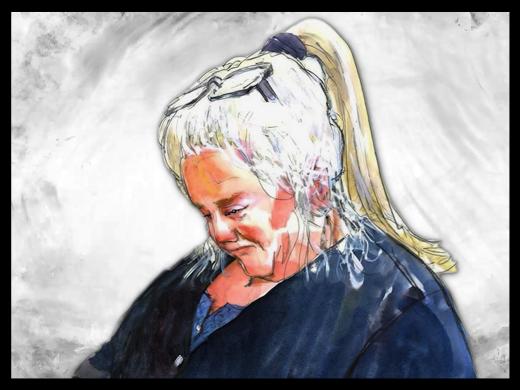
You know, when you're experiencing vision loss, it can be difficult to talk to others about it. That's why we created a workshop on the topic. It's part of our adjusting to vision loss series.
Hadley's Adjustment series is all about taking control of your vision loss. Just having a strategy and being prepared can make sharing so much easier.
Discovering ways to adapt to your vision loss and knowing how to get around safely can be truly empowering.
Although it might be a little scary at first, you'll start to learn to do things in new ways, new ways. You'll realize that you won't have to stop doing the things you love to do, but you may need to find a different way to do it. The Adjustment series, along with all of the workshops mentioned, can be found right here on the Hadley website.
Kara: At the time when I lost vision, it really made me redefine what constitutes meaning in my life. It helped me to point to my relationships. I realized just because I lost vision doesn't mean I'm not gonna call my mom and have conversations with her. I'm not gonna not go to her kitchen table and drink coffee just because this change in my physical being occurred. I'm not saying it was a perfect seamless bounce back into happiness. It's up and down, up and down. Once I realized there was such deep meaning in those moments, it made me redefine my sense of being in the world.
-
Products
Electronic Talking Body Scale- 440
Voice Talking Blood Glucose Monitor Kit
This talking glucose monitor with tactile buttons lets you hear your test results out loud.
-
Websites
Information about insulin pens—including the pros and cons—from the American Diabetes Association.
A variety of resources and support information for adults with diabetes and diabetic retinopathy, from the American Printing House for the Blind.
Living with Diabetic Retinopathy
- Video · 6 minutes
- Video · 4 minutes
- Video · 4 minutes
- Video · 9 minutes
Explore
-
ScripTalk: Text to Speech for Medication Labels
Audio · 19 minutes
-
A family member has vision loss
Resource guide
-
Partnering with a Guide Dog
Article · 4 minutes
-
Resource Roundtable
Discussion
- Explore more
Members also liked
- Video · 4 minutes

- Video · 5 minutes
- Video · 5 minutes
- Video · 3 minutes

Join the Hadley Community
Hadley's resources are always available to you. Create a no-cost Hadley account to go further:
-
Pick up where you left off Everything you start is automatically saved across Hadley.
-
Personalized recommendations We'll suggest resources based on your interests.
-
Join live discussions Live and lively discussions on technology, cooking, and more, all geared toward the community of people living with vision loss.
-
Find peer support Connect with people who understand what you're going through.