
Living with Glaucoma
[Celia] My name is Celia Petersen. I'm from Spring Branch, Texas. I have severe glaucoma. I didn't know what to do. I didn't know where to go.
[Douglas] Let's take a look at how glaucoma can affect some of the most common things we do, along with some tips that might make some of these tasks just a bit easier. Glaucoma is usually caused when fluid builds up in the eye because it's just not draining properly. This can cause pressure in the eye, and that pressure can damage the optic nerve.
Now, the optic nerve, since light signals from your eye to your brain, so if the optic nerve gets damaged, those signals just won't go through, or they won't go through clearly. Although optic nerve damage is permanent, the right treatment might prevent further damage, and that could even include taking medications, having surgery, or using eyedrops. And hey, you probably already know that using eyedrops can be a bit tricky, even in the best circumstances. But just a few tips can help you get the right number of drops in the right place, and you can do it on your own, no matter your level of vision.
Start by removing the cap from your bottle of eyedrops, and put it down in a place you'll remember, like next to the backsplash on your counter or on a clean tissue. Then get ready to put your eyedrops in by lying back or sitting down in a comfortable place. Of course, you'll need to tilt your head back.
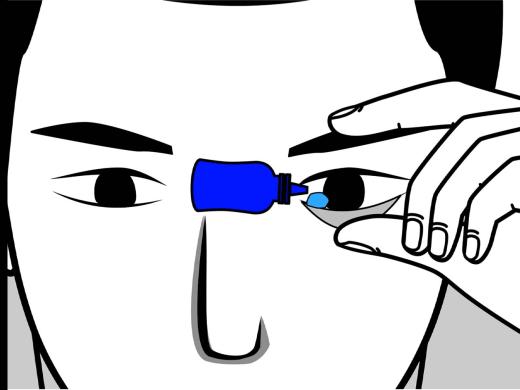
To put eyedrops in your left eye, you'll hold the bottle in your right hand. Now lay the bottle horizontally across the bridge of your nose, making sure the tip is over your left eye. Keeping your eye open, tip the bottle so it points slightly downward, but not so far that it touches your eye, your eyelid, or your lashes. Then count the right number of drops, and if you need to, gently squeeze the bottle to release the drops. Now if you're not sure how quickly the eyedrops will come out, you can check ahead of time by holding the bottle over your hand.
Tip the bottle upside down without squeezing it, and see if you feel any drops falling onto your hand. If you don't, just squeeze the bottle lightly until you do, and that way, you'll know for sure how much pressure it takes and how quickly the drops will come out. Yeah, you'll find even more great tips in our workshop on using eyedrops. One thing you might need to adjust for is glare. Glare can make some tasks really difficult, and by the end of the day, too much glare can make our eyes feel really tired. Knowing how to reduce glare can really enhance your living space.
Choosing the best type of lighting and deciding where to place it can make all the difference in the world. Lampshades are a great place to start. Opaque or filtered shades work really well to keep light shining down or up and not right into your eyes, and they'll work better if they're always below eye level so that the light you need is right where you want it. Everyday tasks can be made so much easier just by getting the right amount of light you need. In the early stages of glaucoma, there might not be any symptoms you can see or feel. However, over time, you might lose your side vision, difficulty seeing in dark rooms.
Text and colors might appear washed or faded out, and if you're not seeing clearly enough to know what's ahead of you, falling can be a real risk, so reducing clutter is so important. This is a real team effort for everyone we live with, and it's important that they understand that furniture should never be moved or rearranged without first letting you know. Tips like keeping cabinet and appliance doors closed, keeping walkways clear of cords and area rugs, and closing interior and entryway doors will go a long way in helping you move around safely. And if you have a dog or cat, attaching a small bell to their collar will allow you to keep track of them as they bounce around the house.
You know, when you're experiencing vision loss, it can be difficult to talk to others about it. That's why we created a workshop on the topic. It's part of our Adjusting to Vision Loss series. Hadley's Adjustment Series is all about taking control of your vision loss. Just having a strategy and being prepared can make sharing so much easier. Discovering new ways to adapt your vision loss and knowing how to get around safely can be truly empowering. Although, it might be a little scary at first, you'll start to learn to do things in new ways. You'll realize that you won't have to stop doing the things you love to do, but you may need to find a different way to do it. The Adjustment Series, along with all of the workshops mentioned, can be found right here on the Hadley website.
[Celia] My grandchildren, they were teasing me 'cause they're trying to uplift my spirit, and I've done all this wool work. And I joked with them, and they said, "You should make hats for blind people because they won't notice your mistakes." So I thought, "Okay," and that just got me outta my funk because I had something to do, something to focus on and decide, You know, just sitting here going, "Okay, well, my whole life has changed, now what?" I had to rethink how to do things and ask people for help. That's the biggest thing, was learning to ask for help. It was a big change. You just gotta learn new ways to do things.
-
Websites
This document from the National Eye Institute provides helpful information about glaucoma.
This website offers information on glaucoma, finding a specialist, and financial resources for treatment.
Living with Glaucoma
- Video · 5 minutes
- Video · 4 minutes
- Video · 4 minutes
- Video · 9 minutes
Explore
-
Audio Described National Parks
Audio · 21 minutes
-
I was just diagnosed
Resource guide
-
Diabetic Retinopathy? First Steps Forward
Article · 5 minutes
-
Writers' Circle
Discussion
- Explore more
Members also liked
- Video · 3 minutes
- Video · 3 minutes

- Video · 5 minutes
- Video · 6 minutes
Join the Hadley Community
Hadley's resources are always available to you. Create a no-cost Hadley account to go further:
-
Pick up where you left off Everything you start is automatically saved across Hadley.
-
Personalized recommendations We'll suggest resources based on your interests.
-
Join live discussions Live and lively discussions on technology, cooking, and more, all geared toward the community of people living with vision loss.
-
Find peer support Connect with people who understand what you're going through.