
Degrees of Vision Loss
We use a lot of words to describe vision and vision loss. It can get confusing. Words like low vision, or legal blindness – what do they really mean to a person who’s having trouble seeing? Here’s the answer – they may not mean much.
But they do mean a lot to the systems and people who help with vision loss. So knowing what these words describe, how they are used and when they are useful, can help us provide the right information at the right time to get the help we need.
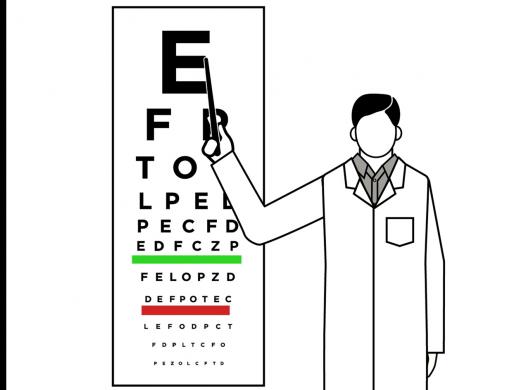
Let’s start by looking at what we think of as typical vision – that is, 20/20 vision. What does that number stand for? Well, it’s an actual measure of acuity, or the sharpness of your vision, from a distance of 20 feet. If you have 20/20 vision, you see details as clearly from 20 feet away as other people with good vision. Now here’s where the numbers are important: If you have 20/200 vision, the detail you see at 20 feet away, someone with good vision can see as far away as 200 feet. Another thing to know – this measurement is always with the best seeing eye and always includes the aid of glasses or contacts.
Now that we know what those acuity numbers mean, let’s talk about another important term – low vision. Low Vision simply means not having enough vision to do whatever it is you need to do – and this is different for each person.
Often its caused by an eye condition like macular degeneration, or diabetes, and low vision can’t be corrected with glasses or surgery. It can be helpful to use this term with family, friends and the general public. Saying you have low vision is a way of stating you’re having trouble with your eyesight without having to go into detail.
Low vision is also used by eye professionals. Some Optometrists specialize in helping people with low vision - so do Certified Low Vision Therapists. They prescribe magnifiers and other devices that make the most of your remaining eyesight.
If our remaining eyesight is not good, but useful enough that it helps us do daily tasks, then we have what’s called functional vision. That means we still use our vision when we can. The great thing is that if we have functional vision we can make lots of changes to our home that give our eyes some help. Check out our workshops on lighting, magnifiers or labeling for some terrific ideas.
It helps to know about functional vision when we discuss our next, very important, topic – legal blindness. Now this is a term we’ve all heard, right? But a lot of folks don’t know what it means. The first thing to understand is that it’s a number. Legal blindness is vision less than 20/200 even with glasses.
We can also be legally blind if we only have a small bit of vision (20% or less) in the center of our eye. But being legally blind doesn’t mean we can’t see – in fact most people who are legally blind still have some functional vision. So, if you hear from a doctor that you are legally blind, its not a reason to panic.
In fact, it may mean that you’re eligible for benefits, including federal tax deductions, work programs, Social Security disability payments, to name a few. Organizations often use that legal blindness number – 20/200 - to decide if you’re eligible for their services. The number itself does not tell how you are doing with your own eyesight. It’s your functional vision that’s important to your daily life, not a number or a designation.
Remember, you can be legally blind and still have plenty of vision. This is important, because folks sometimes avoid services or groups that have the word “Blind” in them. They miss out because they think: “I’m not blind, that can’t be for me”. The thing is, it’s just about a measurement on an eye chart. That’s all the words “legally blind” mean.
So, what do we call it when someone has no vision at all, not even enough to see light or dark? That’s called total blindness. This is what most of us think of when we hear the word “blind”. But only a small portion of people who have blindness are totally blind.
Terms for vision loss are important – they help when we want to make sense of the systems and people that are ready to give us a hand. But everybody’s different - and no-one with vision loss is limited by a measurement or a word. All of us experience vision loss in our own way. We adapt in our own way. And how we are able to use vision to meet our daily needs is unique to each of us.
-
Handouts
Questions to Ask Your Eye Doctor (PDF)
Tips & Takeaways: Degrees of Vision Loss (PDF)
Here are some tips and takeaways from this workshop. Feel free to share the link!
Explore
-
Tips for Hosting with Vision Loss
Audio · 21 minutes
-
I was just diagnosed
Resource guide
-
5 Top Questions After a Macular Degeneration Diagnosis
Article · 5 minutes
-
Book Nook
Discussion
- Explore more
Members also liked
- Video · 6 minutes
- Video · 4 minutes

- Video · 3 minutes

- Video · 5 minutes
Join the Hadley Community
Hadley's resources are always available to you. Create a no-cost Hadley account to go further:
-
Pick up where you left off Everything you start is automatically saved across Hadley.
-
Personalized recommendations We'll suggest resources based on your interests.
-
Join live discussions Live and lively discussions on technology, cooking, and more, all geared toward the community of people living with vision loss.
-
Find peer support Connect with people who understand what you're going through.