
Guide Dog Basics
Do you ever wonder what it would be like to have a guide dog? If you're at all curious, we've got a few questions for you to consider first.
Do you currently walk around your neighborhood by yourself using a cane? Are there places you'd like to go but avoid because you feel uncomfortable or unsafe? How's your stamina? Are you willing to work on it if it's not that great right now? If you have some vision, would you be comfortable trusting a guide dog help you safely navigate curbs, traffic, obstacles, et cetera while you rely on your vision to determine where you want to go and what route to take? Now, how about your family? A guide dog isn't a pet, but everyone in your household needs to be comfortable around dogs. Will everyone follow the basic rules around care, behavior, and control of the dog? Are you willing to commit to weeks of training?
If you answered yes to all of these questions, it's time for you to learn more about guide dogs. A guide dog is specially trained to act as a mobility aid for a person with visual impairment. This includes avoiding obstacles, stopping at curbs and steps, and negotiating traffic.
People who use guide dogs, called handlers, generally need to be able to get around pretty well on their own while using a white cane before learning how to work with a dog. That's because both guide dogs and white canes are tools to help you get around on your own. The dog is used to see and avoid obstacles and the cane is used to locate objects by tapping, feeling and listening. So if you've learned how to use a cane already, it can be a smooth transition to using a guide dog too.
A well-trained guide dog is expected to work while in harness, and not play, eat, greet other dogs or relieve itself while leading its handler. It's the handler's job to provide direction, praise, sometimes correct the dog, and make sure the dog is safe, healthy, and has excellent care. That care includes food, water, bathroom relief, grooming, exercise, shelter, and visits to the vet.
As the handler, you can expect the dog to follow instructions such as forward, left and right unless it is unsafe to do so. When a guide dog disobeys a command, it's for safety reasons. For example, when a handler gives the forward command, if the dog sees a vehicle approaching or another unsafe situation in the way, it will not obey.
Working together as a team, the guide dog will accompany you during all your daily routines. They provide constant companionship, so you'll rarely go out alone. As always, contact a learning expert if you have questions or want to continue learning more about how a guide dog can fit in your life.
-
Websites
Information about Blindness and Guide Dog etiquette, as well as Responsible Pet ownership.
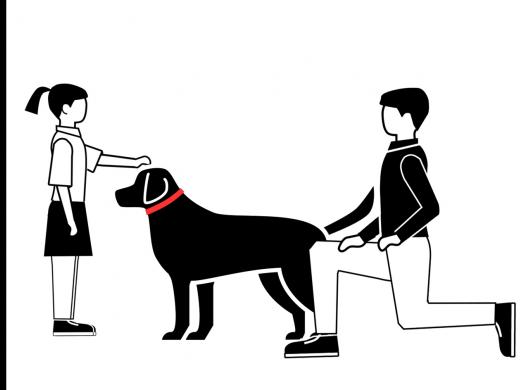
Guide Dogs Series
- Video · 4 minutes
- Video · 4 minutes

Explore
-
"It was something I had to do"
Audio · 5 minutes
-
It’s hard to ask for help. Now What?
Resource guide
-
Shopping Your Way: Grocery Options When You Have Vision Loss
Article · 3 minutes
-
Resource Roundtable
Discussion
- Explore more
Members also liked
- Video · 2 minutes
- Video · 4 minutes
- Video · 3 minutes

- Video · 5 minutes

Join the Hadley Community
Hadley's resources are always available to you. Create a no-cost Hadley account to go further:
-
Pick up where you left off Everything you start is automatically saved across Hadley.
-
Personalized recommendations We'll suggest resources based on your interests.
-
Join live discussions Live and lively discussions on technology, cooking, and more, all geared toward the community of people living with vision loss.
-
Find peer support Connect with people who understand what you're going through.