
Monoculars and Telescopes
There are times when we need some focus on things far away. When we want to see who’s saying "Hi" from across the street, read the menu board at a restaurant, or find the right aisle in the supermarket. Seeing details at a distance depends on a lot of things: lighting, our level of vision, and even the time of day. But in many cases, we can improve our chances of success by using a handy vision aid called a monocular.
A monocular is just another name for a portable telescope. Not the kind of telescope used by astronomers, but a small telescope you can fit in your pocket and hold with one hand. If you’ve used binoculars, you’ve already seen one. A monocular is just half a binocular: one small telescope you hold up to your eye to magnify something in the distance.
There are two basic types of monoculars: ones with a preset focus, and ones you focus yourself. You don’t need to adjust a preset monocular – you just put it up to your eye, and everything beyond a certain distance looks closer and sharper. But there’s a trade-off for this convenience: Anything closer than the preset focus will be blurry. Monoculars with adjustable focus give you more options. Usually, by twisting one end, you can change the focus so things are clear both far away and fairly close up.
Monoculars come in different strengths or powers. It’s easy to think that the higher the power, the better the monocular. But that’s not always the case, and here’s why: The larger an image gets, the less of the total image you are able to see. So if you’re reading a menu board, a very strong monocular will make the letters large, but you’ll only see a few letters at a time. It will take some scanning to read the words and find the prices. It’s almost like you’re up too close. A monocular with a little less power will let you see more words, and you won’t have to move it around so much to read what’s on the menu.
Monoculars need to be held steady to work well, and there are some simple techniques for this. If you’re standing, hold the monocular up to your eye. Then use your free hand to cup the elbow of the hand holding the device. Pull both arms close to your body to reduce movement. If possible, leaning on something solid also helps. If you’re sitting down at a table, use the table to keep your arms steady. With both elbows on the table, use your free hand to hold the wrist of the hand holding your monocular. You’ll be surprised how much more useful a stable monocular can be!
Here’s a tip for finding what you want to see in a monocular: Find the object first, then bring the monocular up to your eye and find it in the lens. So, if you’re trying to read the menu board in a restaurant, look at the board first, then bring the monocular up to your eye. Why? You can see a larger area when you’re not looking through the lens, and it’s easier to find what you want to magnify. Then use the monocular for a closer look.
There are many different types and strengths of monoculars, including ones that clip to your glasses for hands-free use, and more advanced devices built into prescription glasses. But your best chance of success with any monocular will be with the expert help of a vision professional. Contact a learning expert or check out our resource section to find out more and get advice on how to locate a vision professional near you. With all these features, a monocular makes a great addition to your reading toolbox.
-
Products
Telescopes from Eschenbach Optik of America
High-quality optical magnifiers and monoculars and resources for low vision.
LS&S sells a variety of magnifiers, monoculars, handheld and desktop video magnifiers. Phone: (800) 468-4789
MaxiAids sells a variety of magnifiers, monoculars, handheld and desktop video magnifiers. Phone: (800) 522-6294
Independent Living Aids sells a variety of magnifiers, monoculars, handheld and desktop video magnifiers. Phone: (800) 537-2118
Sharper Vision from Wisconsin Council of the Blind & Visually Impaired
Sharper Vision catalog sells a variety of magnifiers, monoculars, handheld and desktop video magnifiers. Phone (800) 783-5213
Manufacturer of blindness and low vision products, including handheld, portable, and desktop video magnifiers. Phone: (800) 444-4443
-
Websites
What is Low Vision? from Eschenbach Optik of America
Demonstration of Optical Magnifiers for Low Vision from InFocus (YouTube Video)
Low Vision Quick Tip - Magnifier Tool from The Blind Life (YouTube Video)
Stand Magnifiers for Low Vision from EyeCarePro (YouTube Video)
Tips for Using a Handheld Magnifier from Second Sense (YouTube Video)
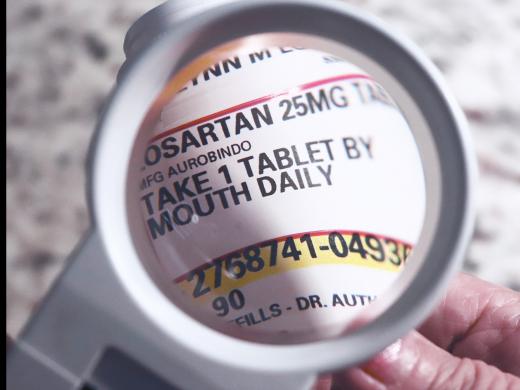
Polly Abbott, Certified Vision Rehabilitation Therapist demonstrates the most effective way to use a hand-held magnifier when reading.
Magnifiers Series
- Video · 4 minutes
- Video · 5 minutes
- Video · 6 minutes
Explore
-
Low Vision and a Love for Hiking: The All Terrain Cane
Audio · 26 minutes
-
I can’t drive anymore
Resource guide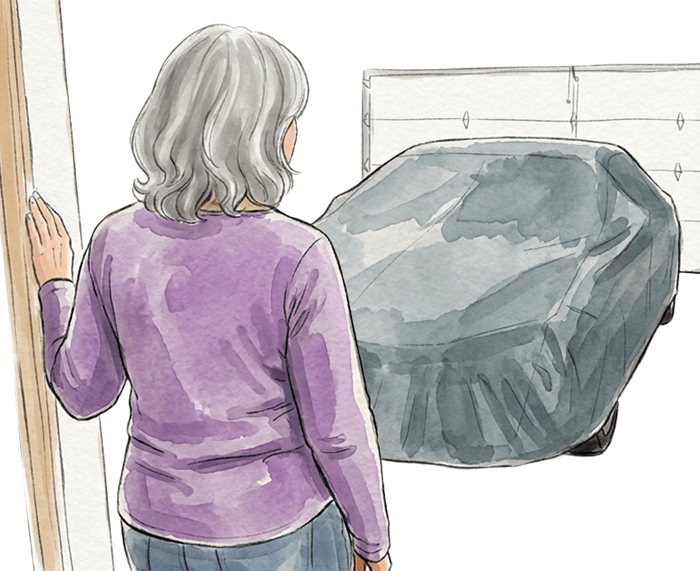
-
Denial and Pretending: Where many vision loss journeys begin
Article · 4 minutes
-
Tech It Out
Discussion
- Explore more
Members also liked
- Video · 5 minutes
- Video · 4 minutes

- Video · 5 minutes
- Video · 3 minutes

Join the Hadley Community
Hadley's resources are always available to you. Create a no-cost Hadley account to go further:
-
Pick up where you left off Everything you start is automatically saved across Hadley.
-
Personalized recommendations We'll suggest resources based on your interests.
-
Join live discussions Live and lively discussions on technology, cooking, and more, all geared toward the community of people living with vision loss.
-
Find peer support Connect with people who understand what you're going through.