
Windows Narrator: Scan Mode
Ricky: Hello, my name is Ricky Enger and today we'll learn how to navigate using scan mode in Windows Narrator. Before we jump in, it's worth mentioning that Narrator actually has two methods of navigating and reading through what's on our screen. There's scan mode, which we'll talk about today, and there's also the ability to navigate by Narrator Views. Navigating with Narrator Views has its own lovely little workshop that you can check out as well.
For now, though, let's talk about scan mode. Actually, let's not talk about it too much. Let's jump right to the fun part and see how it works. Then, we'll talk about it in more detail. Basically, scan mode is a mode that lets us move really quickly through an app or webpage just by using our arrow keys and some nifty little shortcut keys. Okay, so to get started, let's go to our Narrator Home. The easiest way to do this is just to start Narrator and if we haven't changed any settings, Narrator Home will pop right up when we start Narrator. If a setting is changed, we can always get to Narrator Home from our Narrator settings.
So, we'll launch Narrator with control plus Windows plus enter.
Narrator: Starting Narrator. Narrator heading level one. Welcome to Narrator.
Ricky: So, there's not a quick way to know this, but if we haven't changed anything, we're actually in scan mode right now. Let's turn scan mode off now just to see what that's like. To do that, we'll press our Narrator key, which is our caps lock key, and the space bar.
Narrator: Scan off.
Ricky: Cool. Narrator tells us that scan mode is off. Let's press our Narrator plus space bar again to turn scan mode back on.
Narrator: Scan.
Ricky: And there we go. Now, Narrator is pretty smart about scan mode. It actually turns it on automatically in some programs, like Narrator Home as well as in our browser. Also, if we find other programs where we want to use scan mode, we can turn it on and the next time we open that program, Narrator remembers that we like to use scan mode there. Okay, now that we know scan mode is on, we're just going to explore this window. Let's start by pressing our right arrow key.
Narrator: H-I-S space I-S space.
Ricky: Looks like we're moving through the text in this window character by character, just as we would in a document. Seems easy enough. Let's press our down arrow key.
Narrator: QuickStart button alt Q.
Ricky: So now, we're on a button. Let's move down one more time.
Narrator: Learn the basics of Narrator.
Ricky: And we're on text again. So, buttons, text, links, check boxes. Scan mode lets us find all these things in this window just by pressing our arrow keys. Nice. And as easy and efficient as this is, we can do things even faster just by learning a few keystrokes. Let's say that we want to focus on our next button and we really don't care about anything else that might be between where we are and our next button. All we have to do is press the letter B, B for button.
Narrator: Narrator guide button alt G.
Ricky: So there's our next button. But, what about getting quickly back to our previous button? We'll just add a shift key. So, shift plus B.
Narrator: QuickStart button alt Q.
Ricky: And there we are on our previous button. Now, there are lots of other controls besides buttons that we'll encounter as we use different programs on our computer or as we browse the web. And hey, scan mode has the ability to skip right to those controls with a single keystroke. For example, let's press X.
Narrator: Show Narrator Home when Narrator starts check box checked.
Ricky: So X moves us to any check boxes in the window. What does shift plus X do?
Narrator: No previous check box.
Ricky: Adding shift to any of these keystrokes will move to the previous control of that type. But in this window, we don't have any previous check boxes. Not only does Narrator tell us that, we hear a quick sound cue as well. Okay, let's press K.
Narrator: Link. Start Narrator after sign-in.
Ricky: So K will jump us to the next link in our window. And just like before, if we add a shift to that, we'll move to the previous link. There isn't one in this window, but this keystroke will be really handy when we're checking out a webpage. Now, our Narrator Home window doesn't have every control imaginable, but since we just went through how this works, all we really need to know is what the keystrokes are for other controls when we encounter them. So, just a few to get us started: H is for headings, which we'll see a lot as we're browsing the web. F is for form fields, which are controls that we interact with like buttons, check boxes, combo boxes for selecting from a list, edit boxes, radio buttons for selecting one choice from a group of choices. There's also C for combo box, R for radio button, and E for edit box. Knowing those keystrokes is really a great place to get us started with scan mode. Just one quick thing that we haven't talked about with edit boxes, though, and it's really important. Let's say we're in scan mode and we find an edit box. When we're inside that edit box, maybe we start typing the word box.
Narrator: B-O-X.
Ricky: Oh, but wait. B takes us to the next button and X takes us to the next check box when we're in scan mode. Uh-oh. How do we handle that? Well, we said it before: Narrator is really smart. It will automatically turn off scan mode while we're in an edit box so that we can type without having to worry about jumping around to all these different controls. When we're done typing, we'll just press our down arrow key or our Narrator key plus right arrow to move out of our edit box and onto the next item.
Narrator: Narrator.
Ricky: So, there you go. Scan mode in Narrator is a really smart and powerful way for us to navigate in our web browser and, of course, any other programs that we'd like to use it in. I'm Ricky Enger and I'm glad you could spend a little time with me today learning about navigating with scan mode in Windows Narrator.
-
Handouts
Narrator Keyboard Shortcuts (PDF)
Scan Mode Quick-Start Guide (PDF)
This quick-start guide helps you use scan mode to navigate around in different ways to read what's on the screen.
-
Websites
Microsoft Disability Answer desk
Receive assistance by phone or chat for using assistive technology with Microsoft products.
Windows Narrator Series
- Video · 10 minutes
- Video · 9 minutes
- Video · 7 minutes
- Video · 10 minutes

Explore
-
White Cane Safety Day
Audio · 15 minutes
-
Everything feels like it’s too much. Now What?
Resource guide
-
Organizing Your Kitchen with Vision Loss: What’s in the Pantry?
Article · 4 minutes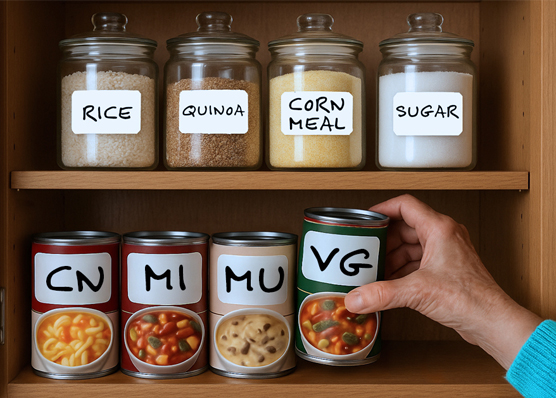
-
Book Nook
Discussion
- Explore more
Members also liked
- Video · 5 minutes

- Video · 5 minutes
- Video · 3 minutes
- Video · 12 minutes
Join the Hadley Community
Hadley's resources are always available to you. Create a no-cost Hadley account to go further:
-
Pick up where you left off Everything you start is automatically saved across Hadley.
-
Personalized recommendations We'll suggest resources based on your interests.
-
Join live discussions Live and lively discussions on technology, cooking, and more, all geared toward the community of people living with vision loss.
-
Find peer support Connect with people who understand what you're going through.