
Word with Screen Reader: Navigation Commands
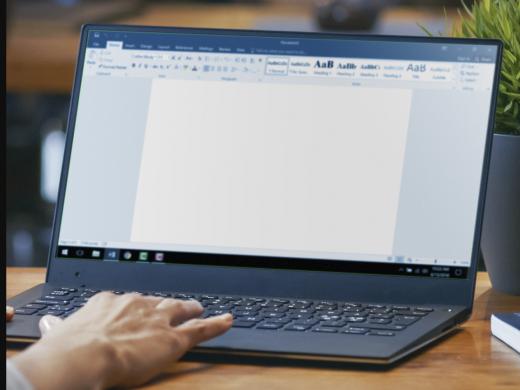
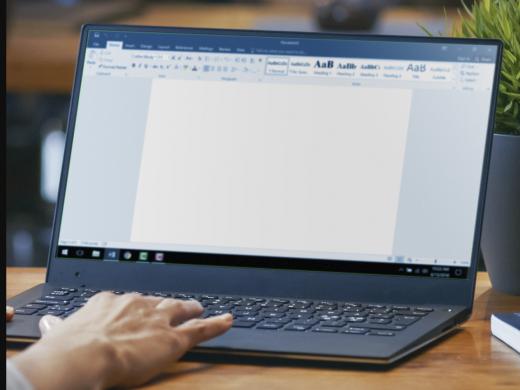
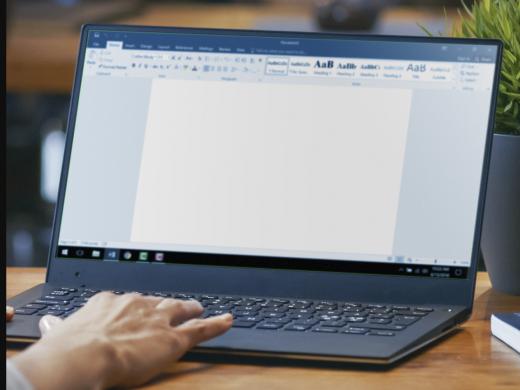
Hello, my name is Vikki Vaughan. Today we'll discuss using shortcut commands to navigate within a Word document. Moving around a document to insert, delete, copy and paste words is a task that we do in many different applications.
Whether we're writing an email, typing out our grocery list, or writing a letter, the ability to move quickly around a document is an essential skill that makes word processing more efficient.
Thankfully, there are handy shortcut commands to assist us in quickly moving to a desired location in our document. In our previous video, Navigating the Desktop, we discussed modifier keys. These are special keys on our keyboard that, when paired with a second or even third key, execute desired commands.
Today we'll be using modifier keys as part of our shortcut commands to navigate and read our Word document. You might recall from our previous video that the modifier key for NVDA is either the Caps Lock key for the laptop configuration, or the Insert key for the desktop configuration. Since I'm using a laptop, whenever I refer to the NVDA key I am pressing the Caps Lock key.
If you would like to review the role of modifier keys, please view the video in this series entitled Navigating the Desktop. You may recall in that same video, we navigated to our desktop and opened a Microsoft Word document. Today, we'll use the same shortcut, Windows key and the letter D to navigate to the desktop. I'll do that now, Windows and D.
Screen Reader: Folder view list, Camtasia 9, two of three.
Vikki: Before we begin any task, it's always a good idea to ensure that we are at the top of our document, webpage, or in this case our desktop. We'll accomplish this by using the keyboard shortcut of Control plus Home. I'll press that shortcut now, Control plus Home.
Screen Reader: Recycle Bin not selected, one of three.
Vikki: The name of the document we'll use today is The Bill of Rights. We'll use first letter navigation to quickly find our document. So I'm pressing the letter T.
Screen Reader: T, The Bill of Rights, three of three.
Vikki: And then I'll press Enter to open our document.
Screen Reader: The Bill of Rights, Word. The Bill of Rights, Microsoft Word document and at multi-line, page one, section one, The Bill of Rights.
Vikki: Let's begin by selecting the entire document and having NVDA read it for us. Obviously, we won't read the entire document today, but you'll get the general idea. To read the entire document, we must start at the top with our trusty shortcut of Control plus Home. I'll now press and hold my Control key and press and release the Home key.
Screen Reader: The Bill of Rights.
Vikki: In Word, this command moves the insertion bar, also called the cursor, to the beginning of the document and our screen reader announces the first line. Now we're ready to use the read all command, which is NVDA and A, for all, on a laptop.
Screen Reader: The Bill of Rights. On September 25th, 1789, the First Congress of the United States proposed 12 amendments to the Constitution.
Vikki: And I press the Control key to silence the screen reader. On a desktop computer the read all command is NVDA and down arrow. The JAWS command is the same as NVDA. On the laptop we use JAWS plus A, and on a desktop the command is JAWS and the down arrow.
To clarify, the read all command reads from the insertion bar to the end of the document. That's why it's important to navigate to the beginning, with Control plus Home, when we wish to read the entire document.
While we're discussing moving to the beginning, let's go over the command to move to the end of a document. Control plus End moves us to the bottom of our document. I'll press Control plus End now.
Screen Reader: Page five, blank.
Vikki: Our Screen reader reads the page number and announces blank. This tells us the insertion bar is now at the end of the document. Let's move to the middle of our document and explore some other navigation and reading commands. Let's say we wish to navigate by paragraph. We pair the up or down arrow keys with our Control key. So let's read the next paragraph by holding down our Control key and pressing the down arrow. I'll do that now, Control plus down arrow.
Screen Reader: United States. All or any of which articles when, articles, article the first, article the second.
Vikki: And we press the Control key to silence. When we wish to move to the previous paragraph, we simply hold down our Control key and press the up arrow. I'll do that now, Control plus up arrow.
Screen Reader: Article the first. After the first enumeration required by the first article of the Constitution.
Vikki: And we press the Control key to silence. There are also Window shortcuts for moving to the beginning and end of a line. When I press the End key, the insertion bar moves to the space at the end of a line and announces the character to the right, which is located on the line below. Let's try that command by pressing the End key.
Screen Reader: T.
Vikki: At the end of the line, we heard it announce the character to the right of the insertion bar, which is located on the next line. When we wish to navigate to the beginning of a line, simply press the Home key and that will move us to the left of the first letter in the current line. So let's do that now, pressing the Home key.
Screen Reader: A.
Vikki: As we heard, it announces the character at the very beginning of the line and places the insertion bar to the left of that character. If we wish to move line by line, simply press the up arrow to read the previous line and the down arrow to read the next line. The insertion bar will move directly above or below our previous location. So let's press our down arrow key.
Screen Reader: There shall be one representative for every 30,000 until the number shall amount to one.
Vikki: Our screen reader read the entire line and the insertion bar is exactly below where it was in the previous line. And as I said earlier, by pressing the up arrow key we move to the previous line. So let's do that now, pressing the up arrow.
Screen Reader: Article the first. After the first enumeration required by the first article of the Constitution.
Vikki: If we wish to read the current line, the NVDA command is NVDA plus L on a laptop. Let's do that now, NVDA plus L.
Screen Reader: Article the first. After the first enumeration required by the first article of the Constitution.
Vikki: On a desktop computer, the current line command is NVDA and the up arrow. In JAWS, the current line command is JAWS and the letter I on a laptop. On a desktop, the current line command is JAWS and the up arrow. These commands do not move the insertion bar so the focus remains stationary. To navigate by sentence we pair the Alt key with the up or down arrow. As we navigate by sentence our insertion bar moves to the beginning of a desired sentence. Let's press and hold our Alt key and press and release the down arrow now to read the next sentence.
Screen Reader: After the first enumeration required by the first article of the Constitution, there shall be one representative for every 30,000 until the number shall amount to 100. After which the proportion shall be so regulated by Congress.
Vikki: When we wish to read the previous sentence, we hold down our Alt key and press the up arrow.
Screen Reader: Article the first.
Vikki: As the previous sentence is announced, the insertion bar moves to the beginning of the sentence. Reading stops at punctuation or a hard line break.
Our next command allows us to move by word. We pair our Control key with the right or left arrow keys to navigate by word. If we wish to move to the next word, we hold down the Control key and press our right arrow.
Let's read a couple of words with this shortcut. Control plus right arrow.
Screen Reader: They, first, after.
Vikki: And I bet you figured out that when we wish to navigate to the previous word, we press Control and the left arrow.
Screen Reader: First, they, article.
Vikki: Each word is announced by our screen reader and the insertion bar moves to the beginning of the word after reading it. When we wish to hear the current word, we press NVDA plus Control plus period to read the current word. Let's try this command, NVDA plus Control plus period.
Screen Reader: Article.
Vikki: The desktop command to read the current word is the number five on our number pad. The JAWS command to read the current word is JAWS plus K on a laptop. JAWS and the number five on the number pad in the desktop configuration. Our insertion bar remains in its original location. When we wish to navigate by character, we simply use our right or left arrow keys. We press the right arrow to move to the next character. I'll demonstrate that now by pressing and releasing the right arrow several times.
Screen Reader: R, T, I, C, L.
Vikki: Our screen reader announces each character as the insertion bar moves from character to character. It is positioned to the left of the announced character. Likewise, we press the left arrow to move to the previous character.
Screen Reader: C, I, T, R, A.
Vikki: To review the current character, we use the NVDA command of NVDA plus period. Let's try that laptop command, NVDA plus period.
Screen Reader: A.
Vikki: On the desktop we use the number pad two to read the current character. The JAWS command to read the current character is JAWS plus comma on the laptop, and simply the num pad five on a desktop computer. The insertion bar does not move when using these commands. With these helpful tips you should be able to use keyboard shortcuts to navigate and read a Word document. I'm Vikki Vaughan and I thank you for joining me today.
-
Handouts
Navigation Commands Quick-Start Guide (PDF)
This quick-start guide helps you move around a Word document with ease.
Word with Screen Reader Series
- Video · 10 minutes

- Video · 6 minutes
- Video · 7 minutes
- Video · 10 minutes
Explore
-
"I'm not as scared"
Audio · 7 minutes
-
It's hard to ask for help
Resource guide
-
Paying for Eye Treatment: Where to Find Help
Article · 7 minutes
-
Recreation Chat
Discussion
- Explore more
Members also liked
- Video · 5 minutes

- Video · 5 minutes
- Video · 10 minutes
- Video · 8 minutes

Join the Hadley Community
Hadley's resources are always available to you. Create a no-cost Hadley account to go further:
-
Pick up where you left off Everything you start is automatically saved across Hadley.
-
Personalized recommendations We'll suggest resources based on your interests.
-
Join live discussions Live and lively discussions on technology, cooking, and more, all geared toward the community of people living with vision loss.
-
Find peer support Connect with people who understand what you're going through.