
Word with Screen Reader: Navigating the Desktop
Hello, my name is Vikki Vaughan. Today we'll discuss the use of modifier keys and shortcut commands. We'll also explore navigating to our desktop to locate and open a Microsoft Word document.
Let's start by talking about modifier keys. Modifier keys are specific keys on our keyboard that when paired with a second or even third key performs certain actions or execute desired commands. Modifier keys are always paired with another key. And they modify how that second key behaves. Shortcut commands, such as those we will use in this video series, always include modifier keys. A common example is Control plus P. When pressed together, this keyboard command executes the print command in most Windows bases applications.
Examples of modifier keys on Windows based keyboards include Shift, Alt, Control, Function, and the Windows key. On Apple keyboards the Alt key is replaced by the Option key and the Windows key is replaced by the Command key.
Screen reading applications also have their own unique modifier keys. Which when paired with other keys, perform certain actions. In both NVDA and JAWS, the modifier key is identified as NVDA or JAWS key. For both applications, it's either the Insert key on the desktop configuration. Or the Caps Lock key on the laptop configuration.
A handy tip in regard to modifier keys: It's a good idea to press the modifier key first, then pair it with the second key. I've often found that when we try to press two or three keys simultaneously, it's easy to press that second key a split second before the modifier key. And guess what happens? Nothing, or we place an unwanted character in our document. If you press the modifier key first, then pair it with the modifier key, you're more likely to successfully execute that desired command.
Now let's turn our attention to locating and opening a desired file on our desktop. For the purpose of today's video, I've place a Microsoft Word document entitled "The Bill of Rights," on the desktop. Now there are several different strategies to navigate to the desktop. We'll use the fastest. A keyboard shortcut of Windows and the letter D. So let's start off by pressing the Windows key. Which is located between your Alt and Control keys to the left of your space bar. While holding down the Windows key, press and release the D key. This brings the focus to our desktop.
Screen Reader: Folder view list. Camtasia 9 two of three.
Vikki: Before we begin navigation, we want to ensure that we're at the top by using the keyboard shortcut of Control plus Home. This is just good practice to ensure that we're at the top of our document, webpage, or in this case, our desktop. So I'll do that now. Control plus Home.
Screen Reader: Recycle bin not selected one of three.
Vikki: There are also several ways to move around our desktop. You might be familiar with the technique of using the arrow keys to move between various folders. And this strategy certainly works. Using the arrow keys is a great way to explore the various folders that we have on our desktop. But it's not really the fastest way to get to a specific folder.
When we know the name of our folder, first letter navigation is mush faster and more efficient. With this technique, we press the flirts letter of the name of the folder or document that we wish to open. As I mentioned earlier, the name of the document we wish to open today is "The Bill of Rights." I'll press the letter T to move to the first file on the desktop that begins with this letter.
Screen Reader: T, "The Bill of Rights" three of three.
Vikki: If we had other files on the desttop that began with the letter T, we can move between those files by repeatedly pressing the T key. I just happened to have only one file on my desktop that begins with this letter. So the focus has landed on the desired file. Once we hear our file announced, all we need to do is press Enter to open it. I'll do that now.
Screen Reader: "The Bill of Rights," Word. "The Bill of Rights," Microsoft Word document, edit multi-line. Page one, section one, "The Bill of Rights."
Vikki: So we heard our screen reader announce the application that's open, which is Microsoft Word, and the title of our document. It also announced the first line of the document, which happens to be the same as the title in this instance. When you wish to verify you've opened the correct document you can use the Read Title command in our screen reader. I'm using NVDA today, so I'll press the NVDA key and the letter T.
Screen Reader: "The Bill of Rights," Word.
Vikki: You can use a similar command in JAWS. Using the JAWS key and the letter T to announce the title. With these helpful tips you should be able to use your modifier keys to navigate your desktop and open a Word document. I'm Vikki Vaughan, and I thank you for joining me today.
-
Handouts
Navigating the Desktop Quick-Start Guide (PDF)
This quick-start guide helps you navigate your desktop with ease.
Word with Screen Reader Series
- Video · 11 minutes

- Video · 10 minutes

- Video · 7 minutes
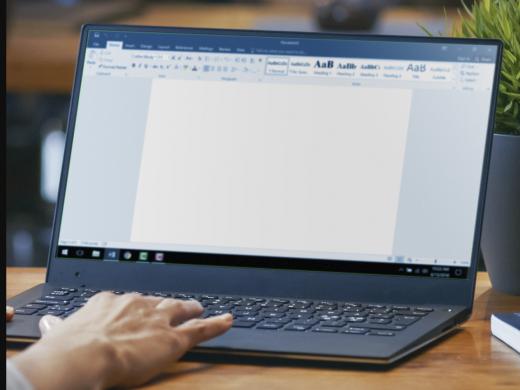
- Video · 10 minutes
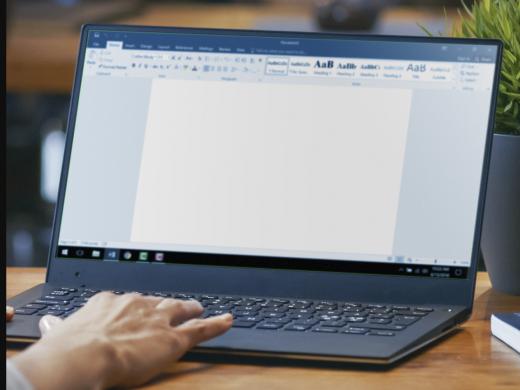
Explore
-
Nuts and Bolts of Home Repair
Audio · 22 minutes
-
A family member has vision loss
Resource guide
-
Travel with Vision Loss: 11 Tips from Experienced Travelers
Article · 8 minutes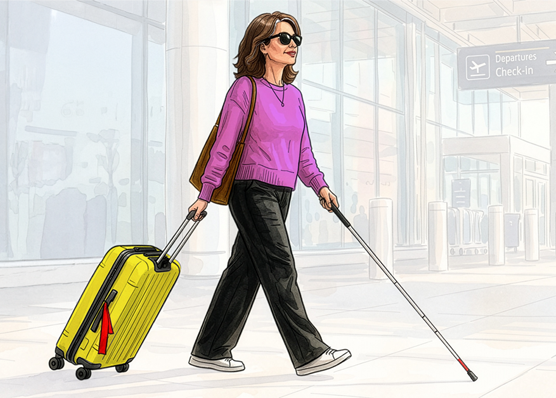
-
Resource Roundtable
Discussion
- Explore more
Members also liked
- Video · 5 minutes

- Video · 5 minutes
- Video · 3 minutes
- Video · 10 minutes
Join the Hadley Community
Hadley's resources are always available to you. Create a no-cost Hadley account to go further:
-
Pick up where you left off Everything you start is automatically saved across Hadley.
-
Personalized recommendations We'll suggest resources based on your interests.
-
Join live discussions Live and lively discussions on technology, cooking, and more, all geared toward the community of people living with vision loss.
-
Find peer support Connect with people who understand what you're going through.