
When Relationships Change
Eugenia: Hi, this is Eugenia DeReu. I lost my vision a few years back. I had a brain tumor and I ended up with surgery and it damaged my ocular nerves. It's a very scary moment because I didn't know what was happening. For three months of my life, I had separated myself from my friends a little bit. And with my family, I will say I was afraid to tell them that I was having trouble because I didn't wanna let them down. I'm the one that pulls it all together.
First off, it was difficult to ask people or say, “I just have to figure out the ride.” And I had to accept things. People want to give you rides, they want to help you. And my friendships, the older friendships, they just came back like it was no big deal. I just don't drive anymore. But I still do a lot of things with my friends.
A family member, this is the other side of it, always says, “Oh, I'm her Uber.” It's funny in the first moment you say it, but after you've said it a thousand times, it makes it on the embarrassing side. Again, they're helping me, so what can I say? I don't wanna hurt somebody's feelings, so I am cautious. Even though I don't believe in their hearts they're trying to hurt me by saying it, I have found myself swallowing it a little bit. My sister, I'm gonna tell her 'cause she's my sister. I'm gonna say, “Okay, the Uber thing has to end.”
With friends, they are there. They've been there and they do help me. They want to help. I have accepted, and it's like you're back to normal. But I've made myself do that, too. People don't know how to react to illnesses or vision loss. They just don't. You know, you're trying to navigate it yourself, but you're trying to help them navigate it, too. It's a journey for all of us.
Narrator: When Eugenia said, “It's a journey for all of us,” she is touching on something we all likely realize is true, but may not have grappled with emotionally. Changes to our vision often change how we relate to others in our life and how they relate to us. Especially those closest to us.
And these dynamics can get complicated in a hurry. Roles may change. Someone who has been the go-to and fixer of all things may find themselves needing to rely upon others for help in ways they never did before. And that may not feel right. It's likely not to feel good. It's easy in these situations for resentments to build or depression to set in.
Eugenia felt these changes acutely and pulled away from family and friends because she didn't want, as she put it, “to let anyone down.” She didn't feel she could play the role she used to play, so she retreated into herself.
Have you felt this? If so, you are not alone. Navigating relationships once we've lost some vision is difficult for just about everyone. But there are some things you can do, some things that may help you, and your friends and family, regain your bearings and start to reconnect.
It often helps to keep the lines of communication open. So it may seem to you like your spouse is avoiding going out in public together now. Are they embarrassed by your halting steps, you wonder? Rather than wonder or assume, try asking them if this is the case. You may be misreading their intentions, and that question could clear the air.
If your son hovers nearby every time you stand up, you might thank him for caring while gently letting him know you’re okay for now. Or, if you wish a friend would check in more often, don't wait for them to guess. Reach out and tell them how much it would mean to you to talk more often.
At first, these conversations may feel awkward or uncomfortable. But, as with many things in life, the more you practice, the easier it becomes. Over time, many people find their relationships actually grow stronger because they're talking more openly than they ever had before.
Even though Eugenia was embarrassed by her sister's joke about being her Uber, at first, she just bit her tongue. She didn't want to admit how she felt, didn't want to risk a conflict. Eventually, though, she found her voice, told her sister how she felt, and they moved past it together.
And even though she pulled back from friends at first, eventually those relationships came back strong. When she said to them, “I just have to figure out the ride,” she was expressing her desire to stay connected and that she needed help with transportation. She learned to ask for help and grew to understand that her friends were actually more than happy to give it.
Another approach to consider with family and friends is to educate them about what you can and can't see. Tell them which specific activities have become more difficult for you. You could also try explaining to them any new tools or gadgets you're learning to use. You may find they are curious and interested in learning more themselves.
Also, sharing with your family stories from others with vision loss may be an opportunity for them to fully understand the emotions you are experiencing. A little bit of knowledge and a chance to build empathy can go an awfully long way.
Now, let's be honest, all of this readjusting and rebalancing relationships can be emotionally exhausting. As Eugenia said, she had to make herself do it. And what she learned was that others in her life were struggling to navigate this new part of their journey, too. It takes time, and trial and error, for everyone involved to figure out what works now and what may not anymore.
Vision loss changes many things, but it doesn't have to take away our ability to connect, to laugh, to love, and to matter in the lives of those around us. With time, patience, and maybe even a few difficult conversations, you may just find that your relationships rebuild and life starts to feel a bit more, as Eugenia put it, like “back to normal.”
The Emotional Impact of Vision Loss
- Video · 9 minutes
- Video · 9 minutes
- Video · 10 minutes
- Video · 9 minutes
Explore
-
COVID-19 and Vision Loss Part 2
Audio · 24 minutes
-
It's hard to ask for help
Resource guide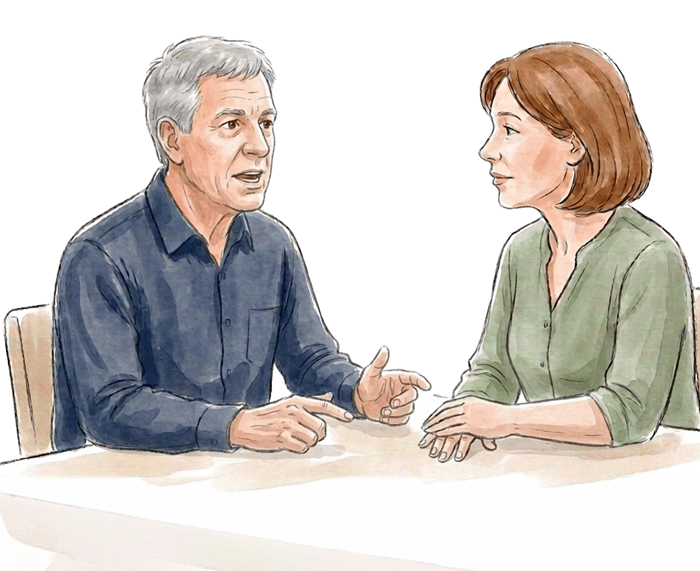
-
5 Top Questions After a Macular Degeneration Diagnosis
Article · 5 minutes
-
Recreation Chat
Discussion
- Explore more
Members also liked
- Video · 5 minutes
- Video · 4 minutes
- Video · 3 minutes

Join the Hadley Community
Hadley's resources are always available to you. Create a no-cost Hadley account to go further:
-
Pick up where you left off Everything you start is automatically saved across Hadley.
-
Personalized recommendations We'll suggest resources based on your interests.
-
Join live discussions Live and lively discussions on technology, cooking, and more, all geared toward the community of people living with vision loss.
-
Find peer support Connect with people who understand what you're going through.