
Protecting Yourself from Bumping into Things
When everything is in its place, getting around the house is pretty much of a routine. But what about those times when we forget to close a cabinet door or a family member moves the chair without letting us know? The good news is that there are techniques you can use to safely move around your home and avoid obstacles you don't expect.
The first technique is good for protecting you from objects at head and chest level, like that kitchen cabinet door. It's called the upper hand and forearm technique. Because well, you're going to use those parts of your body to help you.
Start by putting the back of your hand on your forehead like you would if you were checking your own temperature. Keeping your palm facing away from you gives you more time to react to anything you might come in contact with. Now, extend your elbow until your hand is about a foot in front of you between your forehead and shoulder.
Keep your arm relaxed to make it easier to absorb any impact just in case you do make contact with something. And relax your fingers. Keep them together and slightly bent. That way, if you do make contact with something, you're less likely to jam them like you would if they were rigid and straight.
To help you find objects at waist level, like chairs, tables and doorknobs, you'll use what's called the lower hand and forearm technique. It's called this because you'll be using your lowered hand to help you there. For this one, you'll hold your arm down and diagonally across your body with your palm facing your leg. It's almost like you're pointing at something on the floor.
Now move the hand of that arm away from your body about a foot in front of you. Similar to the upper arm technique, this will give you the most time to react to anything you come in contact with. You can create an extension of your arm by also holding a rolled up newspaper or ruler. Again, keep your fingers relaxed together and slightly bent. Use these upper and lower techniques if you find yourself out in open, unfamiliar spaces.
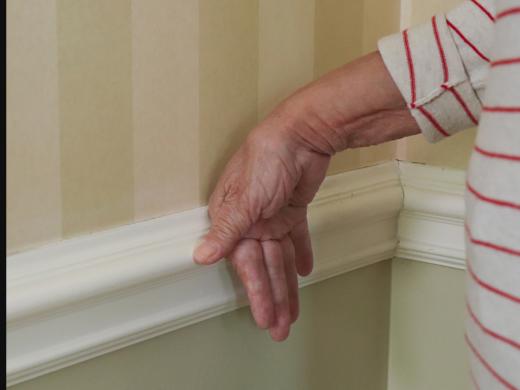
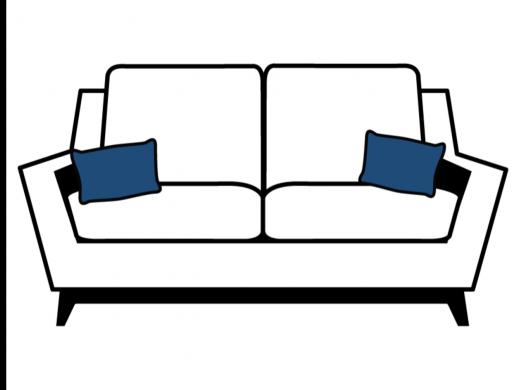
Another useful technique called trailing can be really helpful when you're trying to locate a door or elevator. It also helps when you want to move in one direction without losing contact with the wall or your surroundings. The first thing you do with the trailing technique is face the direction you want to go. Stand parallel to the wall or the back edge of the sofa or a calendar that you're going to trail alongside.
Now take the arm that's closest to the wall or object and extend it out in front of you at waist height. Place the back of your hand against the wall or object remembering to keep your fingers relaxed, together and slightly bent. Start walking letting the hand in front of you find anything you'd come in contact with first.
There may be times you need to cross a doorway while trailing along a wall. Once you reach a doorway, take hold of the doorframe closest to you with your trailing hand. Then with your free arm, use the upper hand and forearm technique to find your way to the doorframe on the other side. You can even combine the trailing technique with the upper hand protective technique to safely move through unfamiliar spaces.
Once you become familiar with these protective techniques, you'll find yourself a lot more comfortable moving around on your own and avoiding those unexpected bumps.
As always, if you have questions or your own tips to share, contact a learning expert. Of course, as with anything new, give yourself time, patience, and practice, and you'll get there.
-
Handouts
Using Sounds to Stay Safe (PDF)
This handout helps you try out auditory skills in new places.
Navigating Unfamiliar Places and Spaces Series
- Video · 5 minutes

- Video · 4 minutes
- Video · 5 minutes
- Video · 8 minutes

Explore
-
"It's psychological, physical, mental, and spiritual"
Audio · 6 minutes
-
I'm feeling overwhelmed
Resource guide
-
Partnering with a Guide Dog
Article · 4 minutes
-
Tech It Out
Discussion
- Explore more
Members also liked
- Video · 5 minutes

- Video · 6 minutes
- Video · 3 minutes
- Video · 4 minutes
Join the Hadley Community
Hadley's resources are always available to you. Create a no-cost Hadley account to go further:
-
Pick up where you left off Everything you start is automatically saved across Hadley.
-
Personalized recommendations We'll suggest resources based on your interests.
-
Join live discussions Live and lively discussions on technology, cooking, and more, all geared toward the community of people living with vision loss.
-
Find peer support Connect with people who understand what you're going through.