
Contracted Braille Writing 17: Dot 56 Final-Letter Contractions
Hadley
Contracted Braille Writing 17: Dot 5-6 Final Letter Contractions
Hadley presents Contracted Braille Writing, Workshop 17: Dot 5-6 Final Letter Contractions.
If you don't already know how to read the dot 5-6 contractions, we recommend first doing Hadley's Reading Workshop, Contracted Braille Workshop 17: Dot 5-6 Final Letter Contractions.
Begin by putting paper in your writing device using the writing device you have available to you, including the slate and stylus, the Perkins brailler or an electronic notetaker.
Also, you will need your braille workbook. If you don't already have one, call Hadley at 847-784-2816 and we'll mail one right out to you.
Alright, let's check out these dot 5-6 final letter contractions! Turn to page 1 in the workbook. At the top of the page, read the final letter contractions for: f-u-l, i-t-y, n-e-s-s, o-n-g, t-i-o-n, e-n-c-e and m-e-n-t.
Let's practice writing paragraphs using these contractions. The paragraphs you'll be writing will be read in this recording and will also be written in uncontracted braille in your workbook. You can use these uncontracted braille paragraphs on pages 2 through 4 to check the spelling of words and names and to check how numbers and other symbols are to be written. Capitalization and punctuation will be read aloud only as needed for clarity. Write the sentences in contracted braille.
Start by indenting and writing this sentence as the first paragraph of a story.
Let's write:
As a young woman, comma, Susannah Cahalan experienced a medical mystery.
She was able to later document the development and cruelness of her illness in her book, comma, opening quotation mark, Brain on Fire, period, closing quotation mark.
In 2009, comma, Susannah was a healthy, comma, thoughtful 24, hyphen, year, hyphen, old reporter for the New York Post.
Then, comma, something started to go wrong, comma, and she began to experience numbness, comma, light sensitivity, comma, paranoia, comma, and erratic behavior.
Despite diving headlong into her work, comma, Susannah wondered what was wrong.
Now begin a new paragraph and write:
For a month, comma, Susannah's illness was a mystery to doctors.
Among the early clinical trials that she documented, comma, a neurologist stated nothing was wrong.
Then a psychiatrist diagnosed bipolar disorder and gave her medication that didn't work.
But her symptoms worsened, comma, and she experienced seizures, comma, hallucinations, comma, psychotic behavior, comma, and last, comma, catatonia.
She lost control of her tongue and it hung from the side of her mouth dripping with drool.
No medication was working for her.
Indent for the next paragraph:
Susannah's symptoms were frightening everyone in her environment, comma, along with baffling some of the top specialists in the, capital, U, period, capital, S, period.
With a monthlong hospital stay and, dollar sign, 1 million bill for unsuccessful testing, comma, disagreement among doctors continued.
Thankfully, comma, one resourceful doctor's creativity in asking a sequence of the, opening quotation mark, right, closing quotation mark, questions, comma, led to successful information regarding the illness.
She had a rare form of encephalitis, comma, commonly known as a brain inflammation, comma, and Cahalan is only the 217th person to ever be diagnosed with it.
Under this doctor's authority, comma, treatment and improvement followed.
The resilience of Cahalan, comma, who now has no association of memories from the experience, comma, shines through.
She was lucky, comma, and the right treatment eventually led to a full recovery.
Finally, write the last paragraph:
Susannah Cahalan was able to later use a combination of family journals and interviews with her doctors to turn the horrific experience into an opportunity for a book, comma, Brain on Fire, comma, so we can all learn from her testament.
Her experience raised questions as to all that doctors still have to learn regarding the brain, comma, and led to exploration and improvement in education for doctors in regard to how the brain works.
You can now check your work by comparing your paragraphs to the contracted braille on pages 5 and 6. In the first sentence of the first paragraph did you just add the letter, d, and not the, ed, contraction at the end of the word, experienced?
Congratulations. You learned to braille the dot 5-6 final letter contractions. Do you have any questions about what you brailled? Reach out to a Hadley learning expert today at 847-784-2816. We are excited to help.
Contracted Braille Writing Series
- Video · 7 minutes
- Video · 9 minutes

- Video · 7 minutes

- Video · 7 minutes

Explore
-
Losing Vision as an Artist
Audio · 28 minutes
-
I'm feeling overwhelmed
Resource guide
-
Organizing Your Kitchen with Vision Loss: Finding Things in the Fridge
Article · 4 minutes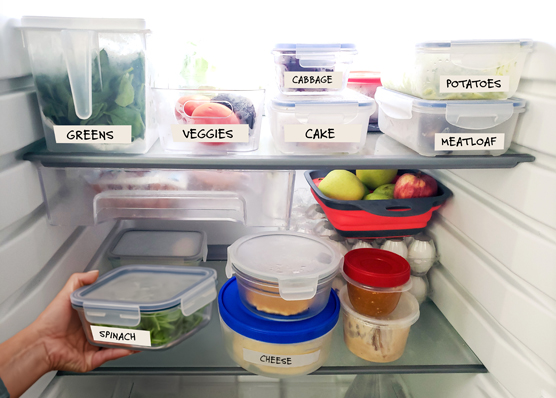
-
Embracing Braille
Discussion
- Explore more
Members also liked
- Video · 10 minutes
- Video · 9 minutes
- Video · 8 minutes
- Video · 7 minutes
Join the Hadley Community
Hadley's resources are always available to you. Create a no-cost Hadley account to go further:
-
Pick up where you left off Everything you start is automatically saved across Hadley.
-
Personalized recommendations We'll suggest resources based on your interests.
-
Join live discussions Live and lively discussions on technology, cooking, and more, all geared toward the community of people living with vision loss.
-
Find peer support Connect with people who understand what you're going through.