
Staying Connected: Signing Your Name
Emma: My name is Emma. My blindness occurred four years ago.
I was a teacher and I love to travel. Seeing things, writing down things, sending memos out to people, sending cards out to people. Then all of a sudden, I went blind.
I can’t even write my own name. It’s just a mess.
Narrator: Adding just a few extra steps to your approach can help you manage everyday things no matter your level of vision. Here are some tips that can help make signing your signature and taking notes much easier.
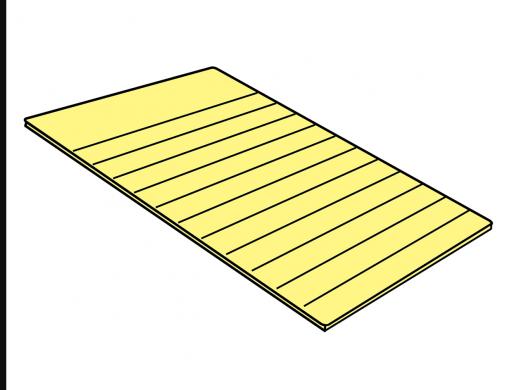
The first thing you can do is make sure you have good lighting. With good lighting you won't have to deal with shadows and glare from different sources like a window, a light or even white sheets of paper. And speaking of paper, try yellow sheets to help prevent glare. And closing any drapes or blinds will help prevent glare from the window. An adjustable task light will allow you to bring the light close, creating the perfect workspace. Keep the lamp below eye level with the light shining at an angle to prevent excess light shining in your eyes. At this point you can position the light where you need it.
Also, placing the lamp on the side away from your writing hand will keep shadows from being cast while you're writing. For instance, if you're right handed, the light goes on your left side.
Using writing paper that has bold lines will be easier to see. There's more information about bold lined paper in our handout in the resources section for this workshop. Also, using a pen that has a bold tip and dark colored ink creates bold lines that will make writing easier to read and see.
Now try practicing signing your name. Using your non-writing hand, place your finger on the space where you want your signature to appear. Then put your writing pen next to that finger. Now sign your name on the signature line. Placing a Post-It Note just below the signature line can make it easier to locate and identify the signature line. You can then remove it after you've signed. Or use the top edge of a credit card as a guide just below the signature line.
Another idea is to find someone willing to help and have them use a marker to make the signature line bolder and easier to see. Another way they could help is to crease along the signature line so that you can feel where to sign.
Magnifiers can be just as useful for writing as they are for reading so if you have one, use it. And be sure to take a look at the handout for more helpful ideas on signing your name. Okay, now that you're all set, let's go ahead and sign.
Jennifer: I’m Jennifer, I work with adults who are losing or have lost their vision. And I’m also blind myself.
Even though I’m not able to see my handwriting anymore, I’m still the one that signs all the greeting cards in our families.
I keep a signature guide in about every purse I own, in the desk drawer. Because you’re never going to know when you need to sign things.
As someone who is blind, I really think that even just writing your signature gives you a sense of pride and a sense of control.
When you’re the one signing your name to the forms and signing your name to the receipt to pay for dinner, it just means a lot.
-
Handouts
This handout helps you use a signature guide to write straight when signing your name.
-
Podcasts
Hadley Presents: Helpful Hints on Handwriting
Listen in to get practical tips on how to keep your handwriting readable.
-
Products
Signature Guide - Aluminum Wallet Size
Slates that have cut-out spaces that serve as signature guides.
20-20-style BoldWriter 20 Pen from MaxiAids
This pen produces easy-to-see and read black ink that is quick-drying and doesn't bleed through paper.
-
Websites
Signing Your Name and Handwriting If You Are Blind or Have Low Vision
General Handwriting Tips and Techniques
Staying Connected Series
- Video · 3 minutes
- Video · 4 minutes
- Video · 4 minutes
- Video · 6 minutes

Explore
-
"None of us know our future"
Audio · 5 minutes
-
A family member has vision loss
Resource guide
-
Vision Loss Help by Phone: 6 Numbers to Know
Article · 5 minutes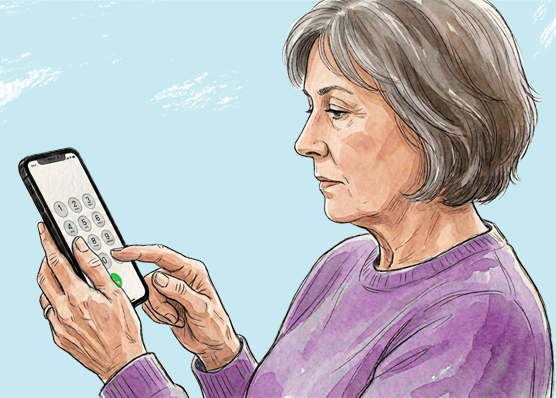
-
Book Nook
Discussion
- Explore more
Members also liked
- Video · 3 minutes

- Video · 3 minutes
- Video · 6 minutes

- Video · 4 minutes
Join the Hadley Community
Hadley's resources are always available to you. Create a no-cost Hadley account to go further:
-
Pick up where you left off Everything you start is automatically saved across Hadley.
-
Personalized recommendations We'll suggest resources based on your interests.
-
Join live discussions Live and lively discussions on technology, cooking, and more, all geared toward the community of people living with vision loss.
-
Find peer support Connect with people who understand what you're going through.