
Workshop 14: Final Dot 5 Words
Hadley
Contracted Braille
Workshop 14: Final Dot 5 Words
Opening
Hadley presents Contracted Braille Workshop 14: Final Dot 5 Words.
Page 1
To begin, make sure you have your braille workbook with you.
If you don’t already have one call Hadley at 847-784-2816 and we’ll mail one right out to you.
Now, in this workshop, let’s learn the last of the dot 5 words.
Feel the braille in the top left corner of the page.
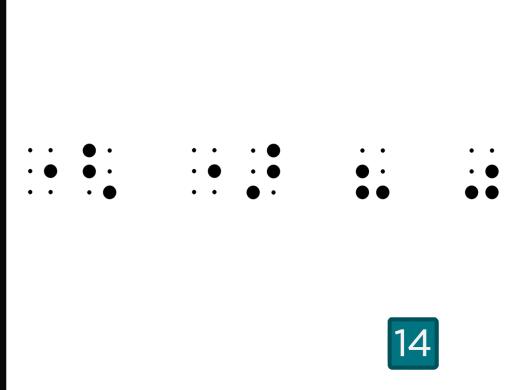
These are the words, “part,” “there,” “ever,” and “one.”
These words all use dot 5 followed by the first letter or symbol of the word.
Above the middle line, you’ll find four rows of braille.
Let’s read these rows together.
The first row is the word “part.” Part is dot 5-p.
Now, let’s read the next row.
This is the word “there,” t-h-e-r-e.
Notice that “there” begins with t-h-e.
So, the word “there” is dot 5 followed by the groupsign “the.”
Next let’s read the third row.
This is “ever.” The word “ever” is dot 5-e.
And now the last row.
This is the word “one,” o-n-e.
The word “one” is dot 5-o.
Below the middle line, you’ll find a row of words.
Let’s read these words together: “ever, there, one, part.”
Turn the page.
Page 2
Feel the braille in the top left corner of the page.
This is “part,” dot 5-p.
Above the middle line are four rows of braille.
As you read the braille and work through the activities, use the Pause button or spacebar for as long as you need to.
Then, select the Play button, or press the spacebar again, to hear the feedback for that item.
Read the four rows of braille above the middle line, and find which row has the word “part.”
If you found “part” in the third row, you’re right!
Below the middle line, you’ll find four more rows of words.
Read the four words in the first row, and find which word is “part.”
If you picked the first word, you found it!
Now, find the word “part” in the second row.
This time, it’s the last word.
Next, find the word “part” in the third row.
It’s the second word.
Finally, find “part” in the last row.
In this row, “part” is the third word.
Turn the page.
Page 3
Feel the braille in the top left corner of the page.
This is the word “there,” t-h-e-r-e.
“There” is dot 5 and the contraction “the.”
Above the middle line are four rows of braille.
Read these four rows and find which one has the word “there.”
If you said the second row, that’s it!
Below the middle line, you’ll find four more rows of braille.
Read the words in the first row and find which one is “there.”
“There” is the second word.
Now, find the word “there” in the next row.
If you picked the third word, you found it!
Next, find “there” in the third row.
This time “there” is the last word.
Finally find “there” in the last row.
It’s the first word.
Turn the page.
Page 4
Feel the braille in the top left corner of the page.
This is “ever,” dot 5-e.
Above the middle line are four rows of braille.
Read these four rows and find the word “ever.”
If you found “ever” in the third row, you’re right!
Below the middle line, you’ll find four more rows of braille.
Read the four words in the first row, and find which word is “ever.”
“Ever” is the last word.
Now, find the word “ever” in the second row.
This time, it’s the first word.
Next, find “ever” in the third row.
In this row, “ever” is the second word.
Finally, find the word “ever” in the last row.
If you picked the third word, that’s it!
Turn the page.
Page 5
Feel the braille in the top left corner of the page.
This is the word “one,” o-n-e.
The word one is dot 5-o.
Above the middle line are four rows of braille.
Read these four rows and find the word “one.”
If you found “one” in the last row, you’re right!
Below the middle line are four rows of words.
Read the first row and find which word is “one.”
“One” is the third word.
Now, find the word “one” in the next row.
In this row, “one” is the first word.
Next, find “one” in the third row.
This time, “one” is the last word.
Finally, find the word “one” in the last row.
Did you pick the second word? That’s it!
Turn the page.
Page 6
Feel the braille in the top left corner of the page, “ever,” “there,” “part,” “one.”
You’ll find four rows of braille near the top of the page.
Each row has three words.
Once again, use the Pause button or the spacebar to stop the audio for as long as you need to complete an activity.
Then select the Play button or press the spacebar again to hear the feedback.
Read the first row.
Which is the correct way to braille the word “one?”
If you said the middle word, you got it!
Now, read the second row.
Which word is the correct braille for “part?”
It’s the first word.
Next, read the third row.
Which word shows “ever” brailled correctly?
The last word is correct.
And now, read the last row.
Which is the correct way to braille the word “there?”
The second word is correct.
Let’s practice reading these words in sentences.
Continue down the page and find the five numbered sentences.
What does sentence 1 say?
If you read, “Will you ever get one?” you got it!
Next, read sentence 2.
This one says, “There is part of it left.”
Go ahead and read sentence 3.
Sentence 3 says, “Will there ever be one part that is right?”
And now, do sentence 4.
This says, “The grandfather questioned the work of the young child.”
How about the last sentence?
Sentence 5 says, “There is still part of that work left for Father or Mother to do.”
Turn the page.
Page 7
Feel the word “there” in the top left corner of the page.
When it’s used in longer words, the dot 5 contraction for “there” must retain its meaning: indicating a place or position.
Near the top of the page, you’ll find two rows of braille.
Let’s read them together.
The first row is the word “therefore.”
In the word “therefore,” “there” retains its meaning, so the dot 5 contraction should be used.
Now, let’s look at the second row.
This word says, “gathered.”
Notice the dot 5 contraction for “there” is not used because the t-h-e-r-e in this word does not mean “there.”
Now, continue down the page and find four rows of braille.
Each row has three words.
Read the first row and choose which word is brailled correctly.
This is the word “therein,” and the first choice is correct.
It uses the dot 5 contraction for “there,” followed by the lower wordsign for “in.”
Which word is brailled correctly in the second row?
This is the word “withered” and it’s a tricky one!
The dot 5 contraction for “there” cannot be used in “withered” because the t-h-e-r-e does not mean “there.”
Both the second and third choices use strong contractions and groupsigns.
So now, which one is correct?
The one that saves the most space is the correct choice.
That means the last one is correct, because the second choice takes five cells, and the last choice only takes four.
Next, read the third row and find which word is brailled correctly.
If you said the second word is correct, you got it!
The word “there” retains its meaning in “therefore,” so the dot 5 contraction should be used.
Finally, read the last row to see which is the correct way to braille the name, “Theresa.”
The t-h-e-r-e in “Theresa” does not mean “there.
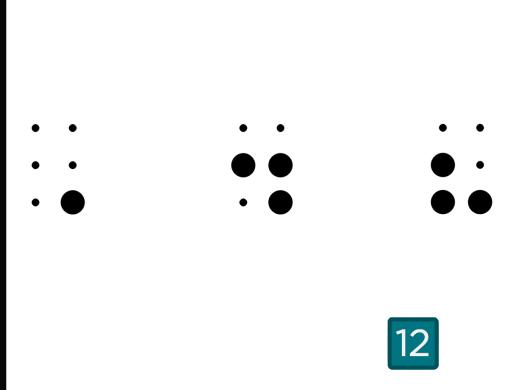
So, the dot 5 contraction is not used, and the last choice is eliminated.
Next, look for the strong contractions “and,” “for,” “of,” “the,” and “with.”
The first choice doesn’t have any of these but the second one does.
What does that tell us about how to braille this word?
The second choice is correct, because as you learned previously, strong contractions are always used over groupsigns.
If you have any questions, just reach out to a Hadley Braille expert. We’re happy to help!
Turn the page.
Page 8
Feel the word “ever” in the top left corner of the page.
Let’s look at using “ever” as a groupsign or part of a longer word.
Find the first row of braille near the top of the page.
These are three braille words. Let’s look at these words together.
The first word is, “whenever.”
Dot 5-e is used as a groupsign anytime the strongest stress in the word “ever” is on the first e, as in “whenever.”
Now, let’s look at the next word, “severe.”
The dot 5-e is not used when the stress is on the second e, as in “severe.”
Finally, let’s read the last word.
The dot 5-e contraction also cannot be used when the e-v-e-r follows an i, as in “believer.”
Continue down the page and find four rows of braille with two phrases in each row.
Read the first row and find the correct way to braille the phrase “cold beverage.”
Did you choose the second phrase? Well done!
Now, read the phrases in the second row and find which one is the correct way to write “a believer.”
The first phrase is correct.
Next, read the third row and find which is the correct way to braille “he perseveres.”
If you picked the second word, you got it!
“Perseveres” cannot use the e-v-e-r groupsign because the stress is on the second e in the letters e-v-e-r.
Finally, find the correct way to braille the phrase in the last row.
The first phrase is the correct way to braille “the retriever.”
The e-v-e-r wordsign is not used in “retriever” because it cannot follow an i.
Turn the page.
Page 9
Feel the braille words “there” and “ever” in the top left corner of the page.
Now, continue down the page and find three pairs of numbered sentences.
Again, for each activity, you’ll select Pause to read and then Play when you’re ready for the feedback.
Read the first pair of sentences and find which one uses the contractions correctly to say, “Will Beverly persevere on that project?”
If you chose sentence 1, you got it!
This sentence uses the contraction “ever” correctly.
Now, read sentences 3 and 4 and find which one is brailled correctly.
Sentence 4 is correct.
Finally, read sentences 5 and 6 to find which one is brailled correctly.
This time sentence 6 is correct.
To review the rules for using the dot 5 contractions for “there” and “ever,” you can always go back and listen to the previous two pages.
You can also call a Hadley braille expert if you need help.
Turn the page.
Page 10
Feel the word “one” in the top left corner of the page.
Let’s look at a few rules for using the dot 5-o contraction.
Find the row of words near the top of the page.
The first word is “one.” Now read the second word.
This is “done.”
The dot 5-o contraction is used for “one” when the letters o-n-e are all in the same syllable.
Now, read the next word.
Dot 5-o can be used even if the letters have a sound that’s different from the word “one,” like in this word, “phone.”
And now, read the last word.
The dot 5-o contraction is not used if a d or r is added to the end of the word, like in “phoned.”
Now, continue down the page to find two more rows of braille.
These rows show two more rules for the dot 5-o contraction. Let’s read the first row together.
These are the words “money” and “honesty.”
In these words, did you notice that the letters o-n-e are not all in one syllable?
The dot 5-o contraction can be used in words that end in o-n-e-y, like “money.”
And the dot 5-o contraction is used in all words that are based on “money” and “honest,” like “honesty.”
Now, let’s read the last row.
These are the words “Boone” and “sooner.”
The dot 5-o contraction cannot be used when the o-n-e directly follows an o, as in “Boone” and “sooner.”
Turn the page.
Page 11
Feel the word “one” in the top left corner of the page.
Now, continue down the page to find four rows of braille with three words in each row.
Read the first row and find the correct way to braille the word “crooner.”
It’s the middle word.
Dot 5-o cannot be used here because the o-n-e is following an o.
Now, read the second row and find which is the correct braille for the word “dishonest.”
Did you choose the middle word? That’s right!
Words that are based on the word “honest” can use the dot 5-o contraction.
Next, read the third row and find which word is brailled correctly.
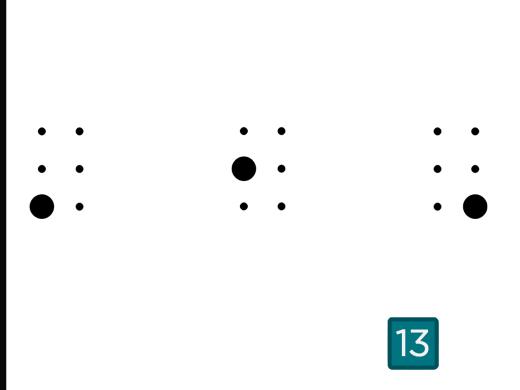
The third word is correct for “gone.”
In the first word, dot 2 is used instead of dot 5.
Can you feel that the dot is closer to the g in the first word than it is in the last word?
Finally, which word is correct in the last row?
The first word is correct for “pioneer.”
Dot 5-o cannot be used because the letters o-n-e are not all in the same syllable.
Move down the page and let’s look at some sentences using words with the dot 5-o contraction for “one.”
This says: His mother asked the young loner, “Will you go to the party?”
Now, read the second sentence.
If you read, “The very clever grandfather gathered with his companions to brighten the lonely young man’s day.” you got it!
How about the third sentence?
This one says, “Everybody was honest; however, some money was still gone.”
Finally, read the last sentence.
The last sentence reads, “Mr. Boone reverted to thievery and did not have an everyday job.”
Turn the page.
Page 12
Feel the braille in the top left corner of the page.
These are the words, “character,” “where,” “through,” and “ought.”
These final dot 5 contractions all contain dot 5 and a groupsign.
These dot 5 contractions are used anywhere they appear in a word.
Above the middle line are four rows of braille.
Let’s read the first row together.
This is “character,” dot 5 followed by the ch groupsign.
Now, let’s read the second row.
This is “where,” dot 5 followed by the wh groupsign.
The third row is “through,” dot 5 and the th groupsign.
And the last row is “ought,” dot 5 followed by the ou groupsign.
Below the middle line, you’ll find a row of words.
Let’s read them together: “character, where, through, ought.”
Turn the page.
Page 13
Feel the braille in the top left corner of the page.
This is “character.”
The word “character” is dot 5 followed by the ch groupsign.
Above the middle line are four rows of braille.
Read these four rows and find the word “character.”
If you found “character” in the first row, you got it!
Below the middle line, you’ll find four rows of braille words.
Read these words in the first row and find which one is “character.”
If you pick the last word, you got it!
Now, find the word “character” in the second row.
In this row, it’s the first word.
Next, find “character” in the third row.
This time, “character” is the second word.
Finally, find the word “character” in the last row.
It’s the third word.
Turn the page.
Page 14
Feel the braille in the top left corner of the page.
This is “where.”
The word “where” is dot 5 followed by the wh groupsign.
Above the middle line are four rows of braille.
Read these four rows and find the word “where.”
If you picked the second row, you got it!
Below the middle line, you’ll find four rows of braille words.
Read the words in the first row and find which word is “where.”
“Where” is the second word.
Now, find the word “where” in the second row.
If you picked the third word, that’s right!
Next, find “where” in the third row.
This time, it’s the last word.
Finally, find the word “where” in the last row.
It’s the first word.
Turn the page.
Page 15
Feel the braille in the top left corner of the page.
This is “through.”
The word “through” is dot 5 followed by the th groupsign.
Above the middle line are four rows of braille.
Read all four rows and find the word “through.”
If you said “through” is in the third row, you got it!
Below the middle line, you’ll find four rows of braille words.
Read the four words in the first row and find which one is “through.”
The last word is “through.”
Now, find “through” in the next row.
This time it’s the third word.
Next, find the word “through” in the third row.
It’s the first word.
Finally, find “through” in the last row.
If you picked the second word, that’s it!
Turn the page.
Page 16
Feel the braille in the top left corner of the page.
This is the word “ought.”
“Ought” is dot 5 followed by the ou groupsign.
Above the middle line are four rows of braille.
Read all four rows and find the word “ought.”
If you found “ought” in the last row, you got it!
Below the middle line, you’ll find four rows of braille words.
Read the words in the first row and find which one is “ought.”
“Ought” is the third word.
Now, read the next row and find the word “ought.”
This time, it’s the last word.
Next, find “ought” in the third row.
Did you say it’s the first word? That’s right!
Finally, find the word “ought” in the last row.
It’s the second word.
Turn the page.
Page 17
Feel the words, “character,” “where,” “through,” and “ought” in the top-left corner of the page.
Now, find the four rows of braille near the top of the page.
In the first row, which word is “ought?”
Did you say it’s the middle word? That’s right!
Now, find the word “character” in the second row.
“Character” is the last word.
Next, read the third row and find the word “where.”
It’s the first word.
And read the last row to find “through.”
“Through” is the last word.
Continue down the page to find four numbered sentences.
Go ahead and read sentence 1.
If you read, “I ought to go through the lighted area where it’s safe!” well done!
Now, read sentence 2.
This one says, “Where will the kids get the costumes to play the characters?”
What does sentence 3 say?
Sentence 3 says, “The characters are through with the part of the script that was scene one.”
And finally, read sentence 4.
This last sentence reads, “The medical staff mischaracterized a breakthrough to the overwrought parents.”
If any of these felt tricky, feel free to replay the page and try them again.
And you can always reach out to a Hadley braille expert for help.
Turn the page.
Page 18
Feel the words “character,” “where,” “through,” and “ought” in the top left corner of the page.
Now, find the three rows of braille near the top of the page and read all three phrases.
Which row says, “characterize elsewhere?”
“Characterize elsewhere” is in the last row.
Now, find the phrase, “characteristics from nowhere.”
Did you find it in the first row? That’s right!
Finally, find the row that says, “characters everywhere.”
It’s the middle row.
Continue down the page to find four fill-in-the-blank sentences.
Read sentence 1, then find which word in the next row fills in the blank.
If you picked the second word, “bought,” you got it!
Now, read sentence 2 and the words below it and choose the correct one to finish the sentence.
The first choice is correct, “characteristics.”
Go ahead and do sentence 3.
The second word, “throughout,” is right!
And finally, read the last sentence and fill in the blank.
The first choice, “Everywhere,” is correct!
Turn the page.
Page 19
Feel the word “where” in the top left corner of the page.
Let’s look at using the dot 5 contraction for “where” as a groupsign.
When you have to make a choice between two contractions, preference should be given to the contraction that’s closer to the correct pronunciation of the word.
Let’s look at an example.
Find the row of braille near the top of the page.
Read these two words, which show “wherever” brailled in two different ways.
The first word is brailled correctly.
It uses the dot 5-e contraction for the word “ever,” because that matches the correct pronunciation.
Continue down the page to find two more rows of braille.
Read the first row and find the correct way to braille the word “whereas.”
If you picked the middle word, that’s it!
Now, read the last row and find the correct braille for the word “wherever.”
It’s the last word.
Turn the page.
Page 20
Feel the braille in the top left corner of the page. This says, “dot 5.”
On this page, you’ll find a list of all the dot 5 words.
Read the contraction at the beginning of the first row.
Now, read the two words following the contraction.
Which of these spelled out words is the dot 5-ch contraction?
Did you choose the second word, “character?” That’s right!
Now, do the same for the rest of the dot 5 words on this page.
When you’re done, we’ll go through the list together.
Now, let’s go through this list of dot 5 contractions.
Dot 5-d is “day.”
Dot 5-e is “ever”
Dot 5-f is “father.”
Dot 5-h is “here.”
Dot 5-k is “know.”
Dot 5-l is “lord.”
Dot 5-m is “mother.”
Dot 5-n is “name.”
Dot 5-o is “one.”
Dot 5-ou is “ought.”
Dot 5-p is “part.”
Dot 5-q is “question.”
Dot 5-r is “right.”
Dot 5-s is “some.”
Dot 5-t is “time.”
Dot 5-the is “there.”
Dot 5-th is “through.”
Dot 5-u is “under.”
Dot 5-w is “work.”
And finally, dot 5-y is “young.”
Turn the page.
Page 21
Feel the word “health” in the top left corner of the page.
Now, scan the full page.
Notice that there’s a title in the first row and four paragraphs of information.
Sometimes you’re asked to give a record of your health to your doctor.
Here’s a look at some of the information you might need to provide.
Read the title.
Did you read, “Family Health Records?” You got it!
Now, read the first paragraph to find out whose information should be included in your health questionnaire.
You should include information from your mother, your father, and your grandparents.
Next, read the second paragraph to see what other types of information should be included.
It says to include a record of your past diseases and hospitalizations, as well as your medications.
Now, read the third paragraph and find out what it focuses on.
This paragraph focuses on allergies.
And finally, read the last paragraph and find out what you can do if you realize you forgot something.
You can call the office later. Well done!
That was quite a long passage you read and some great review of dot 5 contractions.
Select Next to complete this workshop.
Completion
Congratulations! You’ve learned all the dot 5 contractions.
If you have questions about using these contractions or anything else you’ve learned in these workshops, reach out to a Hadley Braille Expert at 847-784-2816. We’re happy to help!
Contracted Braille Series
- Workshop
- Workshop
Explore
-
"I get out there and I still do what I can"
Audio · 5 minutes
-
I can’t drive anymore
Resource guide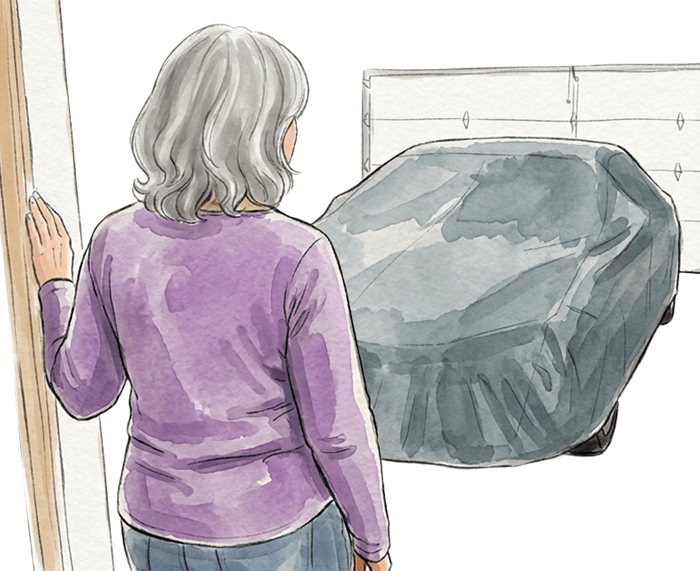
-
Organizing Your Kitchen with Vision Loss: Taming the Freezer
Article · 4 minutes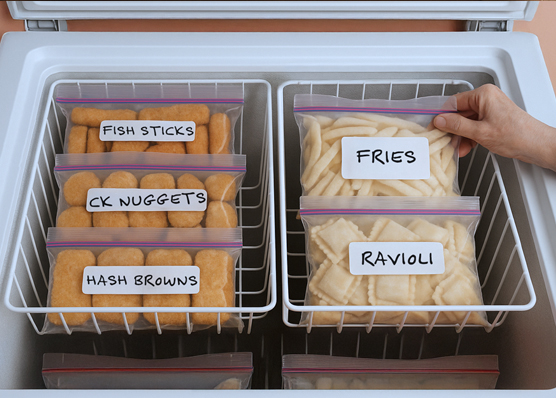
-
Recreation Chat
Discussion
- Explore more
Members also liked
Join the Hadley Community
Hadley's resources are always available to you. Create a no-cost Hadley account to go further:
-
Pick up where you left off Everything you start is automatically saved across Hadley.
-
Personalized recommendations We'll suggest resources based on your interests.
-
Join live discussions Live and lively discussions on technology, cooking, and more, all geared toward the community of people living with vision loss.
-
Find peer support Connect with people who understand what you're going through.