Workshop 2: More Alphabetic Wordsigns
Hadley
Contracted Braille
Workshop 2: More Alphabetic Wordsigns
Opening
Hadley presents Contracted Braille, Workshop 2: More Alphabetic Wordsigns
Page 1
First, make sure you have your braille workbook with you.
If you don’t already have one, call Hadley at 847-784-2816, and we’ll mail one right out to you.
Feel the letters “p,” “k,” “r” in the top left corner of the page.
These are the letters for the next set of alphabetic wordsigns.
When these letters are standing alone, they’re each read as words.
Use the Pause button or spacebar to stop the audio for as long as you need to complete an activity item.
Then select the Play button, or press the spacebar again, to hear the feedback for that item.
Find the line in the middle of the page.
Above the middle line, find three boxes containing braille words.
In the first box, you’ll find p. When p is by itself, it is read as the word, “people.”
Now, check out the middle box.
K is the word, “knowledge.”
In the last box, r by itself is the word, “rather.”
Below the middle line, you’ll find a row of words.
Go ahead and read these new words.
The words are, “people,” “knowledge,” “rather.”
Turn the page.
Page 2
Feel the braille in the top left corner of the page.
You now know that p stands for the word, “people.”
Above the middle line, find the box with the alphabetic wordsign “people.”
If you picked the last box, you found the word “people.”
Below the middle line, you’ll find three rows of braille words.
Place your fingers at the beginning of the first row.
Now read the three words. Which word is “people?”
If you picked the second word, you got it!
Find the word “people” in the next row.
It’s the first word.
Finally, find the word “people” in the last row.
This time, the word “people” is the last word.
Turn the page.
Page 3
Feel the braille in the top left corner of the page.
K stands for the word “knowledge.”
Above the middle line are three boxes with words.
Find the box with the word “knowledge.”
If you picked the first box, you found “knowledge.”
Below the middle line you’ll find three rows of words.
Place your fingers at the beginning of the first row.
Go ahead and read the three words. Which word is “knowledge?”
If you picked the second word, that’s right!
Now find “knowledge” in the next row.
It’s the last word.
Next, find the word “knowledge” in the third row.
This time it’s the first word.
Turn the page.
Page 4
Feel the braille in the top left corner of the page. This is r, for “rather.”
Above the middle line, find the box that has the word “rather.”
If you picked the last box, you found “rather.”
Below the middle line, you’ll find three rows of words.
Place your fingers on the first row. Which word is “rather?”
The second word is “rather.”
Find the word “rather” in the second row.
If you picked the last word, you found it!
Find “rather” in the last row.
“Rather” is the first word in that row.
Turn the page.
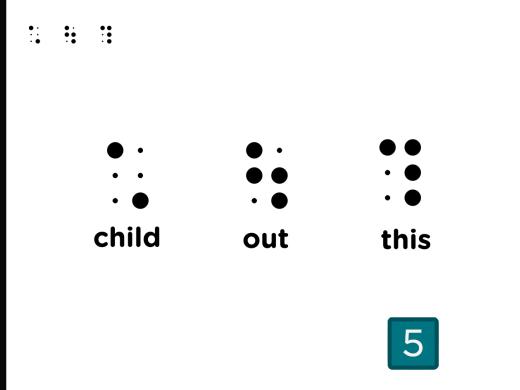
Page 5
Feel the braille words, “people,” “knowledge,” “rather” in the top left corner of this page.
Use the Pause button or spacebar to stop the audio for as long as you need to complete an activity item.
Then select the Play button or press the spacebar again to hear the feedback for that item.
Above the middle line, you’ll find three rows of braille words.
Which row has the words, “people,” “knowledge,” “rather,” in that order?
If you picked the second row, you got it!
Below the middle line, you’ll find two braille sentences. Which sentence is brailled correctly?
That last sentence is correct. It says, “We’d rather help people.”
You don’t need to spell out the words “rather” and “people.”
Notice how much space you save when you use wordsigns?
Turn the page.
Page 6
Let’s learn a new braille symbol. Feel the braille in the top left corner of the page.
This is the symbol for a blank.
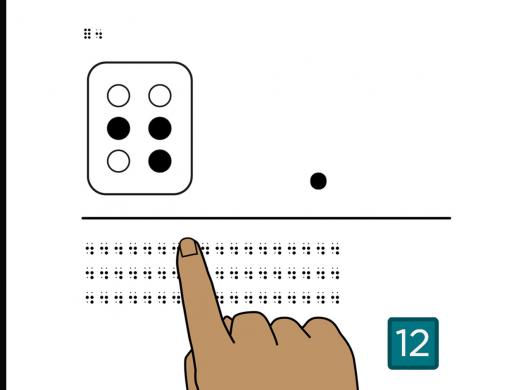
It’s a two-cell symbol using dots 4-6, then dots 3-6.
It means something that is missing or that you need to fill in, as in “fill in the blank.”
Above the middle line you’ll find three rows of braille.
Find the row that contains the word “date” followed by a blank.
Remember, you can pause while you read and then select Play again to get the feedback.
Did you say it is in the second row? That’s correct!
Note that in braille only one braille blank is used no matter how long the blank might be in print.
Then, below the middle line you’ll find three more rows of braille. Read the first row.
It says, “I can come. yes _ no _.
What does the second row say?
If you read, “address: _” you got it!
Now try the last row.
This one says, “email/fax _”
Turn the page.
Page 7
Feel the braille in the top left corner of the page.
This is the blank. So, let’s try something new.
Above the middle line, you’ll find three words. Read the words.
Then, below the middle line, you’ll find three “fill-in-the-blank” sentences. Read the first sentence.
Did you find the blank after the word “my?”
Which word above the middle line would you put in the blank to complete this sentence?
Did you say the middle word, “knowledge?”
That’s correct! “My knowledge is broad.”
Read the second sentence.
Did you find the blank after the word “visit?”
Which word from above the line fits in the blank?
The first word, “people,” fits in this blank. “Visit people at home.”
Finally, read the last sentence.
Which word from above the line fits in this blank?
Yes, the last word, “rather,” completes the sentence, “I’d rather go.”
Feel free to replay this page and try again.
If you have any questions, reach out to a braille expert.
When you’re ready, turn the page.
Page 8
Feel the words, “people,” “knowledge,” “rather,” in the top left corner of this page.
Above the middle line, you’ll find two rows of braille.
In the first row, there are three words.
Find the word “people’s” that would be used with the apostrophe in a sentence like “It is the people’s government.”
If you picked the second word, you found it!
Now, in the second row, find the word “peoples” when there are more than one, like in the phrase, “The native peoples.”
It’s the first word.
Again, alphabetic wordsigns cannot touch other letters, but can be used with punctuation.
Below the middle line are two sentences. Find the sentence that reads, “Local peoples rather like cold air.”
It’s the second sentence. You should spell out the word “peoples.”
Turn the page.
Page 9
Feel the words, “people,” “knowledge,” “rather,” in the top left corner of the page.
Let’s practice reading these words in sentences.
Above the middle line are three sentences.
Find the sentence, “My people skills knowledge rather helps.”
The second sentence is correct.
The contractions for “people,” “knowledge,” and “rather,” are used.
Below the middle line are three sentences.
Go ahead and read the first sentence.
If you read, “I like knowledge rather well.” You’re right.
Now read the second sentence.
It’s, “We’d rather help people.”
Finally read the last sentence.
It reads, “A few people use wisdom to get knowledge.”
Turn the page.
Page 10
Feel the words, “people,” “knowledge,” and “rather” in the top left corner of the page.
Above the middle line are two sentences. Read the first sentence.
It is, “My people’s motto is can/do!”
The forward slash is used, so you spell out the words touching it.
Let’s try another sentence using the forward slash and alphabetic wordsigns.
Read the second sentence.
If you read, “He will give you/me an update,” you got it!
Below the middle line are three rows of braille.
Which row has the words “rather,” “knowledge,” “so,” and “people” in that order?
The first row has the words “rather,” “knowledge,” “so,” “people” in that order.
Turn the page.
Page 11
Feel the letters “m,” “e,” “h,” “n” in the top left corner of the page.
These are the next set of alphabetic wordsigns.
Above the middle line, you’ll find four boxes containing braille words.
In the first box, you’ll find m.
When m is by itself, it’s read as the word “more.”
Now let’s look at the second box.
The letter e by itself is the word “every.”
Check out the third box.
This is h for the word “have.”
And now the last box.
You found n for the word “not.”
Below the middle line, you’ll find a row of words.
Let’s read these words together: “more,” “every,” “have,” “not.”
Turn the page.
Page 12
Feel the braille in the top left corner of the page.
You now know that m stands for the word “more.”
Above the middle line, you’ll find four boxes containing words.
Which box contains the alphabetic wordsign “more?”
If you picked the first box, you found the word “more.”
Below the middle line, you’ll find four rows of braille words.
Place your fingers at the beginning of the first row.
Now read the four words. Which word is “more?”
It’s the last word in this row.
Find the word “more” in the second row.
If you picked the first word, that’s right!
Next, find the word “more” in the third row.
This time, the word “more” is the last word.
Finally, find the word “more” in the last row.
In this row, “more” is the second word.
Turn the page.
Page 13
Feel the braille in the top left corner of the page.
You now know that e stands for the word “every.”
Above the middle line are four boxes containing words.
Which box contains the word “every?”
If you picked the second box, you found “every.”
Below the middle line, you’ll find four rows of words.
Place your fingers at the beginning of the first row.
Go ahead and read the four words. Which word is “every?”
If you picked the second word, that’s right!
Now find “every” in the next row.
This time, “every” is the third word.
Next, find the word “every” in the third row.
In this row, “every” is the first word.
Finally, find the word “every” in the last row.
“Every” is the last word.
Turn the page.
Page 14
Feel the braille in the top left corner of the page. This is h, for the wordsign “have.”
Above the middle line you’ll find four boxes.
Which box contains the word “have?”
If you picked the third box you found “have.”
Below the middle line, you’ll find four rows of words.
Place your fingers on the first row. Which word is “have?”
The third word is “have.”
Which word is “have” in the second row?
“Have” is the last word in that row.
And where is “have” in the third row?
It’s first this time. Finally find the word “have” in the last row.
If you read the second word as “have,” that’s it!
Turn the page.
Page 15
Feel the braille in the top left corner of the page.
The wordsign n stands for the word “not.”
Above the middle line, find the four boxes. Which box contains the word “not?”
If you picked the last box, you found “not.”
Below the middle line, you’ll find four rows of words.
Read the first row. Which word is “not?”
The third word is “not.” Which word is “not” in the second row?
It’s the last word in that row.
And where is “not” in the third row?
If you said first, you got it!
Finally, find the word “not” in the last row. The second word is “not.”
Turn the page.
Page 16
Feel the word “more” in the top left corner of the page.
Above the middle line are three rows of braille.
Which row has the words, “have,” “more,” “every,” and “not” in that order?
Select Pause while you read. Then select Play when you’re ready for the feedback.
If you chose the middle row, you got it!
Below the line are three sentences.
Read the first sentence.
This sentence reads, “We will have more fun, but we will not run.”
Now read the second sentence.
If you read, “Every class can get more books, but not yet.” Great!
How about the third sentence?
It says, “More people like to have apples, but I have melon.”
Turn the page.
Page 17
Feel the word “every” in the top left corner of the page.
Above the middle line, you’ll find four words.
Go ahead and read those words.
Below the middle line, you’ll find four fill-in-the-blank sentences.
Now, read the first sentence.
Again, for each sentence, select Pause to find it, and then Play to get the feedback.
Use one of the words above the line to fill in the blank.
If you picked the word “more,” you’re right!
Now that sentence will read, “You can have two cookies; I will make more.”
Let’s do the same for the second sentence.
First, read the sentence. Then fill in the blank with one of the words above the line.
The right word here is “every.”
The sentence should read, “Can every dog play ball?”
Which word best completes sentence three?
The word “not” fits here.
Then it says, “Will we get to go to camp, or not?”
Finally, read the last sentence.
Which word fills in the blank?
This sentence works with the word “have.”
Now it reads, “You have slept well.”
Turn the page.
Page 18
Feel the word “have” in the top left corner of this page.
Let’s practice using wordsigns in more sentences.
Above the middle line you’ll find three rows of braille words.
Each word is written two different ways in braille.
On the first row, which word is the correct way to write “notice” in braille?
If you said the first word, you’re right!
If we try to use the wordsign “not” in notice we end up with the word “nice.”
Now read the second row and choose which is the correct way to braille the name, “Mr. More.”
It’s the first name. The alphabetic wordsign “more” can be used as a name with a capital indicator.
Now look at the third row of braille above the line.
Which is the correct way to braille, “Ms. Morell?”
The first way is correct. The alphabetic wordsign “more” cannot be used with other letters.
Below the middle line you’ll find three sentences.
Read the first sentence. And remember that you can pause the audio whenever you want more time.
This sentence says, “People do not like fruit at every snack.”
What does the second sentence say?
If you read, “My second book is more-notable every week,” that’s it!
Alphabetic wordsigns can be used with a hyphen.
Finally, let’s read the last sentence.
That sentence reads, “Every woman will have/not have a new home.
Notice that words “have” and “not” must be spelled out when beside the forward slash.
Turn the page.
Page 19
Feel the words “not,” “more,” “have,” and “every” in the top left corner of this page.
Above the middle line, you’ll find three rows of braille.
Read the words in the first row and find which one shows “sophomore” brailled correctly.
If you said the first word, you’re right!
On the second row, which word shows how to correctly braille “Sycamore?”
The first word is the correct way to braille “Sycamore.”
Now let’s look at the third row and two different ways to braille “Hackamore.” Which way is correct?
The second word is brailled correctly.
Below the middle line, you’ll find four braille sentences.
Read the first sentence.
If you read, “Every kid will have Mr. More, but not Ms. Peoples,” you’re right!
Go ahead and read the second sentence.
This one says, “He’d rather not go, so we will wait.”
How about the third sentence?
It reads, “I’d rather have pie, but not cake (less is more).”
Notice that the word “more” can be used with the parenthesis.
Finally read the last sentence.
This one says, “Every man likes you, but you do not like every man.”
Turn the page.
Page 20
Feel the words “every,” “more,” “have,” and “not” at the top left corner of the page.
Above the middle line, there are three rows of braille.
Go ahead and read the first row.
If you read, “EVERY HUG” in all capital letters, you’re right!
Notice the wordsign “every” can be used with the capital word indicator.
Now, read the middle row.
This says, “five-or-more” with dashes between the words.
The wordsign “more” can be used with the dash.
And now read the third row.
This one says, “sure/not sure.”
Notice that “not” must be spelled out when it is used with the forward slash.
Below the middle line, you’ll find five rows of braille. This is a list of special foods for the family.
Read the first row of braille below the middle line.
This title for the list reads, “Family Special Diet Foods:”
Now read the next row.
If you read, “Deborah: more veggies but not corn,” that’s it!
What does row three say?
It says, “Hannah: can have more fruit every snack.”
Now let’s read the fourth row.
This one says, “Grady: can have more fruit but not bananas.”
And finally, read the last row.
The last row reads, “Jamal: more calcium every snack but not milk.”
Turn the page.
Page 21
Feel the words “people,” “rather,” “have,” and “more” in the top left corner of this page.
Above the middle line, you’ll find one row of braille.
Read the title above the middle line.
If you read, “Food at People’s Pub,” that’s it!
Now let’s read the rows of braille below the middle line. Read the first row.
If you read, “People’s Pub Special (beef tacos), you got it!
Now read the second row on this menu.
It says, “Corn salsa (rather sweet, not spicy).
What does the third row say?
The third row reads, “Hot fries–have bacon too!”
Next, read the fourth row.
It reads, “People’s deep pan pizza.”
Finally, what is in the last row?
The last row reads, “Lemon cake (every bite has more zip!)
Select Next to complete this workshop.
Completion
Congratulations! You’ve learned seven more alphabetic wordsigns.
Now that you’re learning contracted braille, the next time you’re out to dinner, you might want to ask for a braille menu.
It’ll be fun seeing how many of the words you can read.
If you would like to talk to a braille expert, call 847-784-2816. We are happy to help out!
Contracted Braille Series
- Workshop
Explore
-
Getting the Most from Your Eye Doctor Appointments
Audio · 26 minutes
-
A family member has vision loss
Resource guide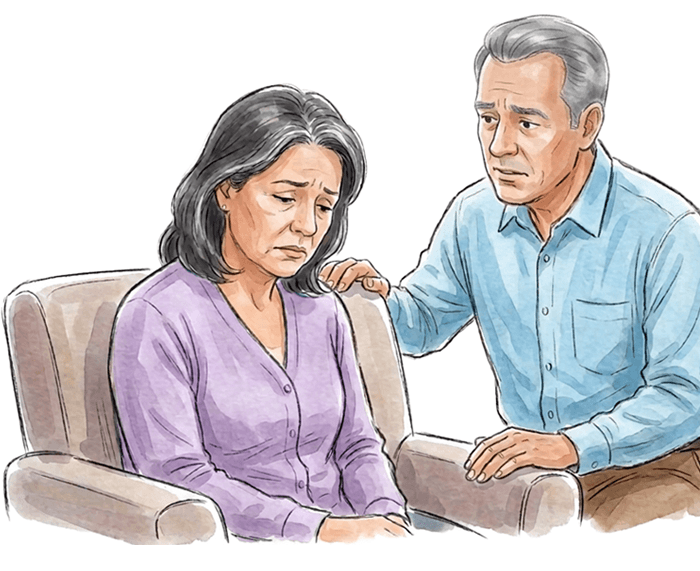
-
Shop Smarter with AI: Real Tips for People with Vision Loss
Article · 5 minutes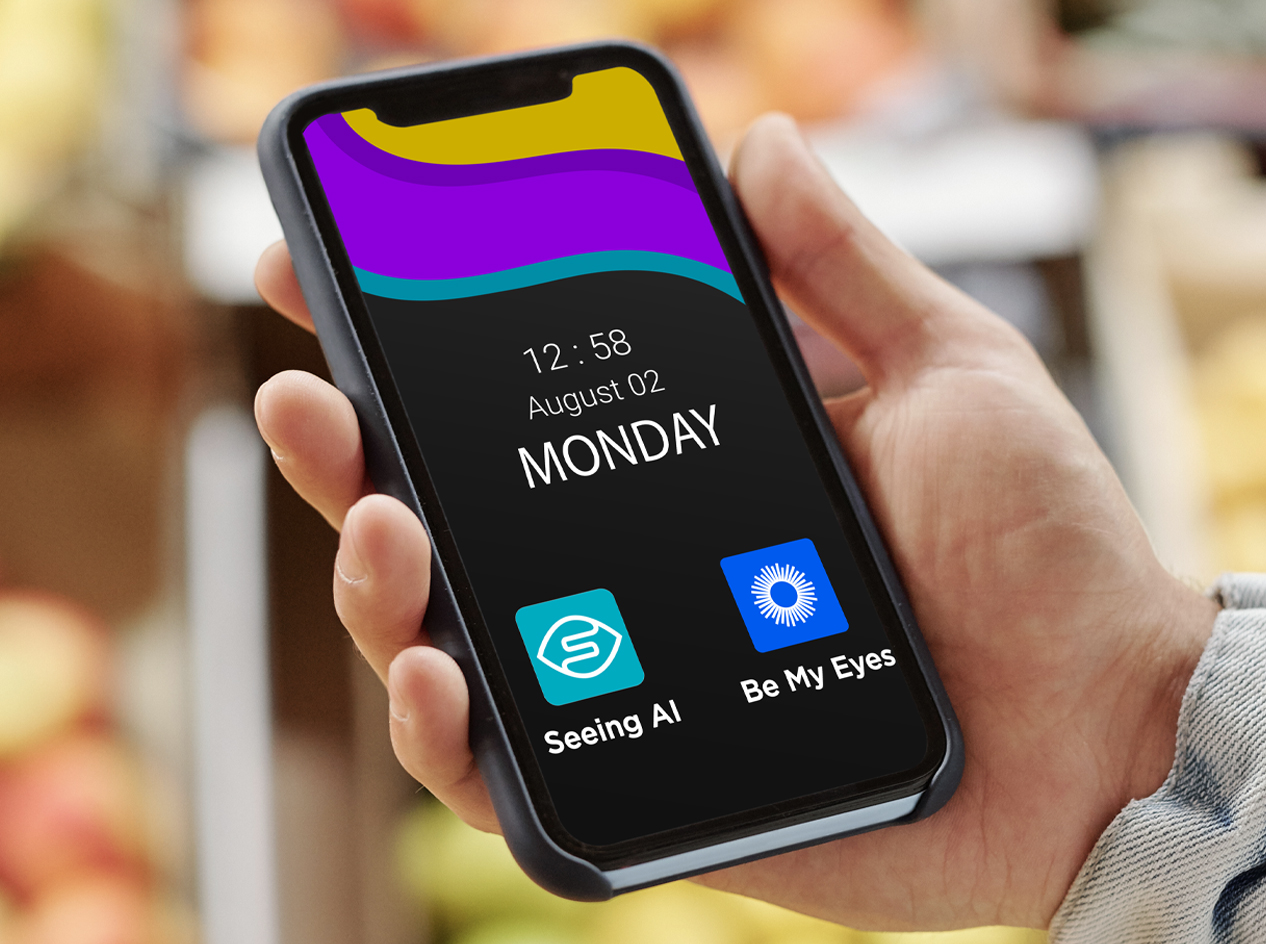
-
Embracing Braille
Discussion
- Explore more
Members also liked
- Workshop

- Video · 6 minutes
Join the Hadley Community
Hadley's resources are always available to you. Create a no-cost Hadley account to go further:
-
Pick up where you left off Everything you start is automatically saved across Hadley.
-
Personalized recommendations We'll suggest resources based on your interests.
-
Join live discussions Live and lively discussions on technology, cooking, and more, all geared toward the community of people living with vision loss.
-
Find peer support Connect with people who understand what you're going through.