
Contracted Braille Writing 25: Shortforms Set 7
Hadley
Contracted Braille Writing 25: Shortforms Set 7
Hadley presents, Contracted Braille Writing Workshop 25: Shortforms Set 7.
If you don't already know how to read these shortforms, we recommend first doing Hadley's reading workshop, Contracted Braille, Workshop 25: Shortforms Set 7.
Okay, let's check out these shortforms. Turn to page 49 in the workbook. At the top of the page, read the shortforms: afterward, according, immediate, braille, receive, receiving, deceive, deceiving.
In this workshop, you will be writing paragraphs using shortforms. These uncontracted paragraphs can be found on pages 50 through 52 of the workbook for reference.
Start by indenting and writing this sentence in the first paragraph of a story:
If you want to receive a brief education about an amazing woman, comma, immediately read about the life of Helen Keller.
According to historians, comma, Keller was born on June 27, comma, 1880 in Tuscumbia, comma, Alabama to Arthur and Kate Keller.
She was born with both sight and hearing but was deceived by fate when she became ill with a very high fever at 19 months old.
Her parents received devastating news that the fever caused permanent damage to her hearing and vision, comma, and she was now deaf and blind.
Even though they were unable to communicate with or control their daughter, comma, the Kellers didn't seek immediate help, comma, but waited a few years.
Start paragraph two and braille:
Receiving the biggest change of her young life, comma, Helen met Anne Sullivan when Helen was just six years old, comma, according to family.
Teacher Sullivan was not deceived by Helen's wild ways.
She saw that Helen was very bright, comma, but unruly and spoiled.
Helen received a life, hyphen, changing education from Anne, opening parenthesis, visually impaired herself, closing parenthesis, comma, who was only 20 when she began teaching Helen.
According to Keller, comma, Anne taught her hand gestures, comma, fingerspelling, comma, lip reading, comma, braille, comma, and many other skills.
Let's start the next paragraph:
Helen was later accused of plagiarism, comma, being thought to have deceived others, comma, but those claims were unfounded.
She was just that smart, exclamation mark.
Never deceiving anyone, comma, Helen Keller emerged as quite a well, hyphen, educated young woman.
She went to Radcliffe College, comma, afterward becoming the first deaf and blind woman to receive a college degree.
Receiving honorary doctoral degrees from Harvard and Temple Universities, comma, she loved to read and learn.
Indent to begin the next paragraph and write:
Helen read books in braille whenever she could, comma, but when she couldn't, comma, Anne would read to her by interpreting hand, hyphen, in, hyphen, hand sign.
Helen rose to immediate recognition due to the fact that she always advocated for the underdog, comma, according to those that knew her best.
She was deceiving no one when she became a champion of the blind and deafblind communities.
According to multiple sources, comma, Helen received many awards throughout her life for her humanitarian efforts.
Let's finish the passage with the final paragraph:
Famous people, comma, including Mark Twain and Eleanor Roosevelt, comma, immediately flocked to Helen due to her compassion.
In 1964, comma, receiving the Presidential Medal of Freedom, comma, Helen decided that she had lived a fulfilled life.
According to Helen Keller, comma, opening quotation mark, We can do anything we want to if we stick to it long enough, period, closing quotation mark.
You can now check your work by comparing your paragraphs to the contracted braille on pages 53 through 55. In sentences three and four of the first paragraph, you can just add the letter, d, to words like, deceived, and, received, instead of e-d.
Congratulations, you've learned to braille a seventh set of shortforms. If anything was tricky, just reach out to a Hadley braille expert at 847-784-2816. We are happy to help.
Contracted Braille Writing Series
- Video · 8 minutes
- Video · 9 minutes

- Video · 7 minutes

- Video · 7 minutes

Explore
-
The Impact of Vision Loss on a Marriage
Audio · 22 minutes
-
I'm having trouble reading
Resource guide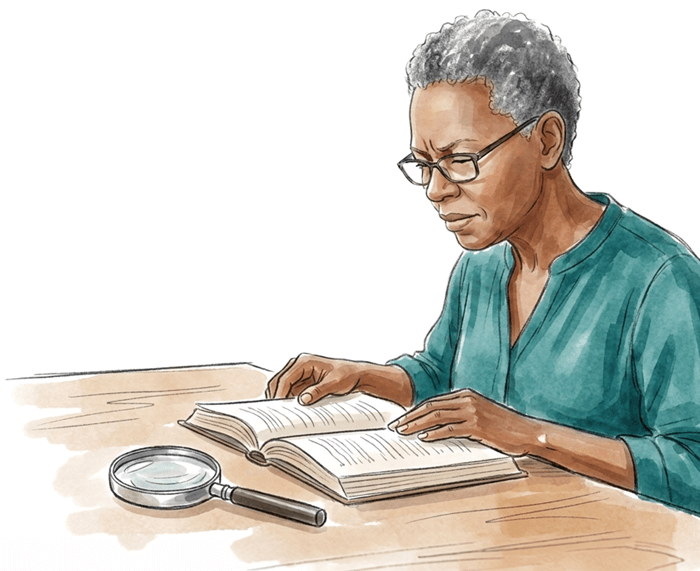
-
7 Helpful Tech Terms When You Have Vision Loss
Article · 4 minutes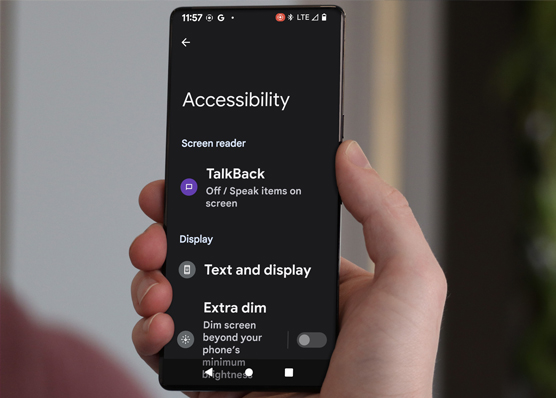
-
Resource Roundtable
Discussion
- Explore more
Members also liked
- Video · 10 minutes
- Video · 9 minutes
- Video · 8 minutes
- Video · 7 minutes
Join the Hadley Community
Hadley's resources are always available to you. Create a no-cost Hadley account to go further:
-
Pick up where you left off Everything you start is automatically saved across Hadley.
-
Personalized recommendations We'll suggest resources based on your interests.
-
Join live discussions Live and lively discussions on technology, cooking, and more, all geared toward the community of people living with vision loss.
-
Find peer support Connect with people who understand what you're going through.