
Windows Low Vision: Fonts
Some computer fonts can be challenging for those of us with visual impairments. If the font is too busy or cluttered, it can be hard to read, especially when magnified. Thankfully, Windows makes it easy to customize our fonts to fit our visual needs. Let's find out how.
From anywhere on our computer, let's press the Windows key and the letter D to move to the desktop. We'll open the context menu by either right-clicking on any blank spot on the desktop or by using the keyboard shortcut shift and F10. This opens a menu.
You might hear this mean you called a context menu. It contains shortcuts that help us use our computer more efficiently. We'll select personalize from the list. We can do that with our mouse pointer or press the letter R as in right for me. This opens our Setting window where we'll use our mouse pointer to select fonts in the left pane.
We have several options for personalizing our font. We can drag and drop font files that we've stored in File Explorer or on our desktop. We also have a link to the Microsoft store, where we can get other fonts.
Moving down our page, we see examples of free fonts that are already available on our computer. I really like that we have a sample for each font. It gives us a chance to see if a particular font will work for us. As we can see, there are many choices available. When we're ready to try a font, we use the mouse pointer to select our desired font.
A new window opens up with a cool feature. We use this slider bar to change the font size. We can also type a few words in this preview window to get a better idea if this font is the one we want to check out.
Moving down the page, we see different text attributes we can use with certain font styles. Many of them are old friends like bold and italic. When we want to go back to our font page, we select the left arrow in the top-left corner. If we know the name of a certain font that we're looking for, we can type it into this search edit field. It will search through all of the fonts that are already installed on our computer.
Most programs like Microsoft Word, Excel, and PowerPoint include fonts that are automatically installed when we install the program. For those of us with low vision, the easiest fonts to see are Arial, Calibri, Helvetica, Gotham, and APHont.
APHont is font that is designed especially for low-vision users. It was created by the American Printing House for the Blind. Qualified users can download it for free. Check out the resources below for a link to the download. In today's workshop, we explored how to customize fonts in our settings. I'm Vikki Vaughan, and I thank you for joining me.
-
Handouts
Step-by-step directions for exploring fonts to select the font and size that is best for you.
Lock Screen and Log-In Screen (PDF)
Step-by-step directions for customizing your Lock and Log-In screens
Identifying the Operating System (PDF)
Check which edition and version of Windows your device is running
Help and Troubleshooting (PDF)
Step-by-step directions for accessing help options that are built into your operating system or application
Creating a Shortcut to the Desktop (PDF)
Step-by-step directions for creating desktop shortcuts to the apps you use most often.
Shortcuts and Tips to Make Your Screen Easier to See (PDF)
Step-by-step directions for using Windows shortcuts to make it easier to see what's on your screen.
Step-by-step directions for using text-to-speech options in Microsoft apps.
Computer Monitor Aspect Ratio (PDF)
Choosing the appropriate monitor size.
Help for choosing the right computer hardware to use your computer more effectively.
-
Websites
Link to APHont font download page.
Describes the function of each function key on a keyboard.
Categorizes and lists all the Windows keyboard shortcuts.
Tech support page for HumanWare assistive technology products
Accessibility features on your iPhone
Google Disability Support Team
How to contact the Google Disability Support team
Microsoft Disability Answer Desk
Microsoft Accessibility Resources
Technical support contact page
Resources for the meaningful education and training webinars you need to get the most out of APH products and services
Employment information resource offered by the American Printing House for the Blind for job seekers who are blind or visually impaired
NVDA support and resources page
Searchable Help Center page
Customizing Windows for Low Vision Series
- Video · 5 minutes
- Video · 5 minutes
- Video · 3 minutes
- Video · 4 minutes
Explore
-
Hadley and NEI Launch Cooking Workshops in Spanish
Audio · 19 minutes
-
I can’t drive anymore
Resource guide
-
How to Choose the Right Magnifier for Low Vision
Article · 7 minutes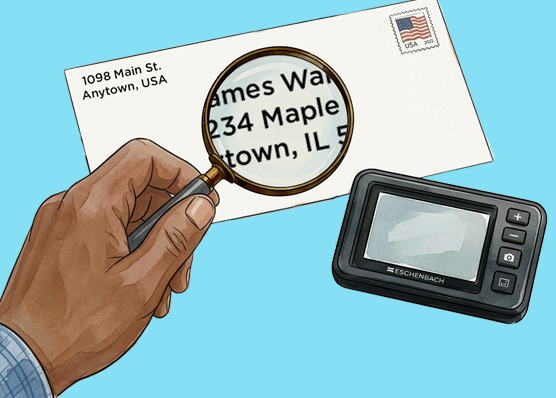
-
Embracing Braille
Discussion
- Explore more
Members also liked
- Video · 12 minutes
- Video · 9 minutes

- Video · 6 minutes
- Video · 6 minutes
Join the Hadley Community
Hadley's resources are always available to you. Create a no-cost Hadley account to go further:
-
Pick up where you left off Everything you start is automatically saved across Hadley.
-
Personalized recommendations We'll suggest resources based on your interests.
-
Join live discussions Live and lively discussions on technology, cooking, and more, all geared toward the community of people living with vision loss.
-
Find peer support Connect with people who understand what you're going through.